Management system
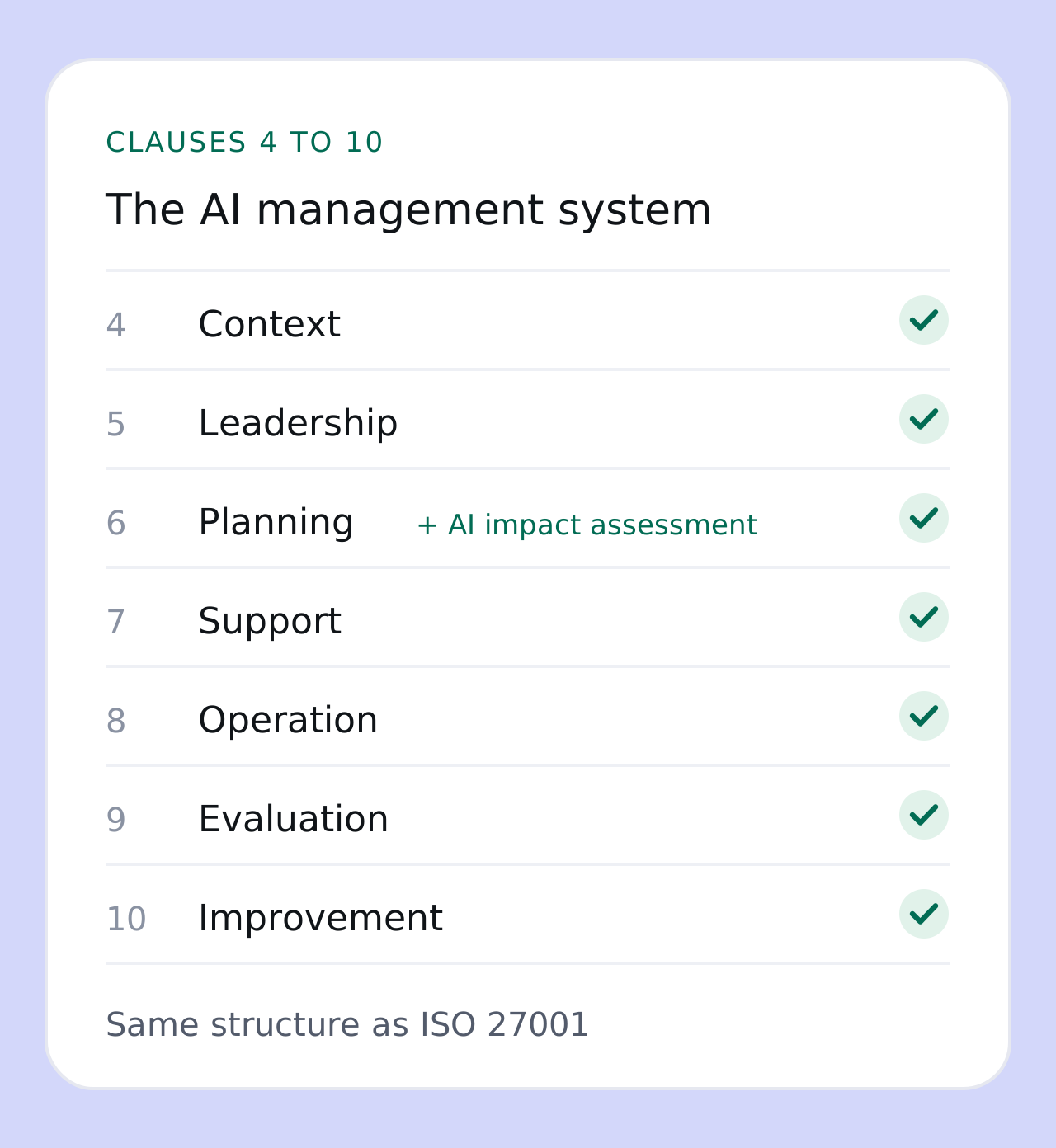
Clauses 4 to 10
Context, leadership, planning, support, operation, evaluation and improvement, with an AI system impact assessment added to planning.
ISO/IEC 42001 is the international standard for an AI management system, published in December 2023 and certified by an independent body. It covers how you govern the AI you build or use, including what you need from the suppliers behind it.
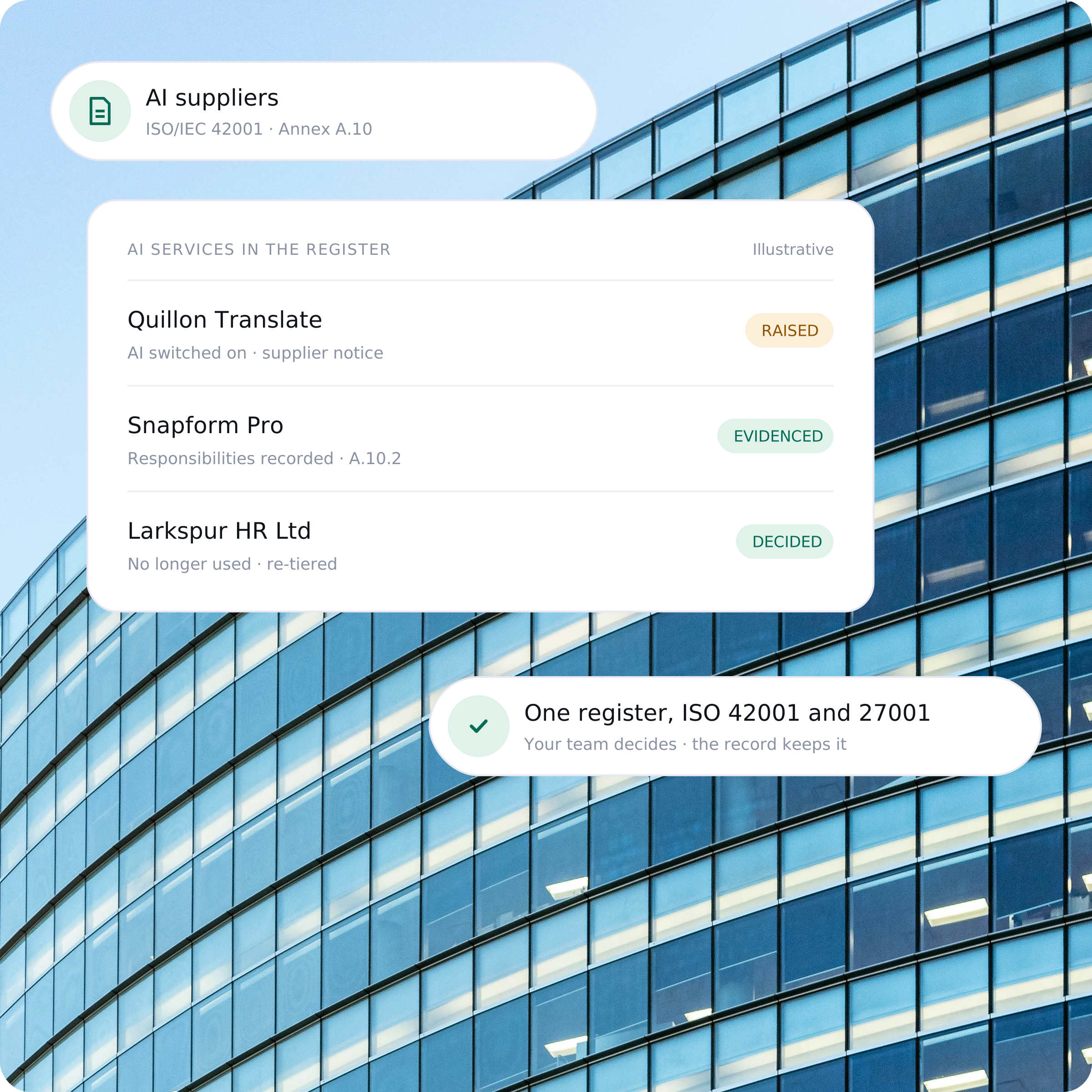
Much of the AI a business relies on comes from suppliers. Montro keeps those AI services in one register with your other suppliers, raises changes such as AI switched on inside a tool you approved, and records what your team decided.
Framework
ISO 42001 uses the same clause structure as ISO 27001, so the two can run as one management system. What differs is the AI-specific content.
Management system
Context, leadership, planning, support, operation, evaluation and improvement, with an AI system impact assessment added to planning.
Controls
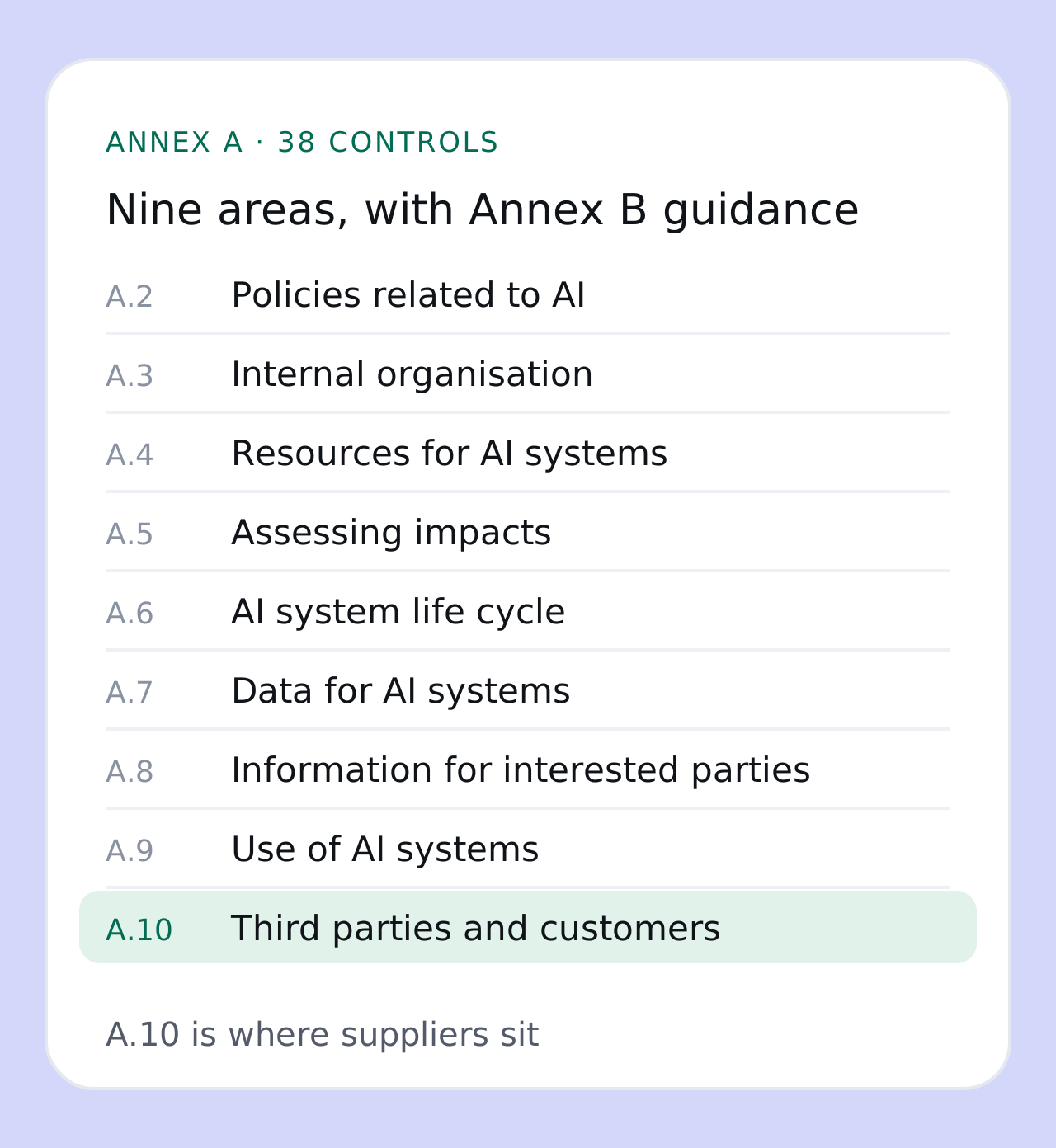
From AI policy and data to impact assessment, the AI lifecycle and use. Annex B explains how to apply each one.
Third parties
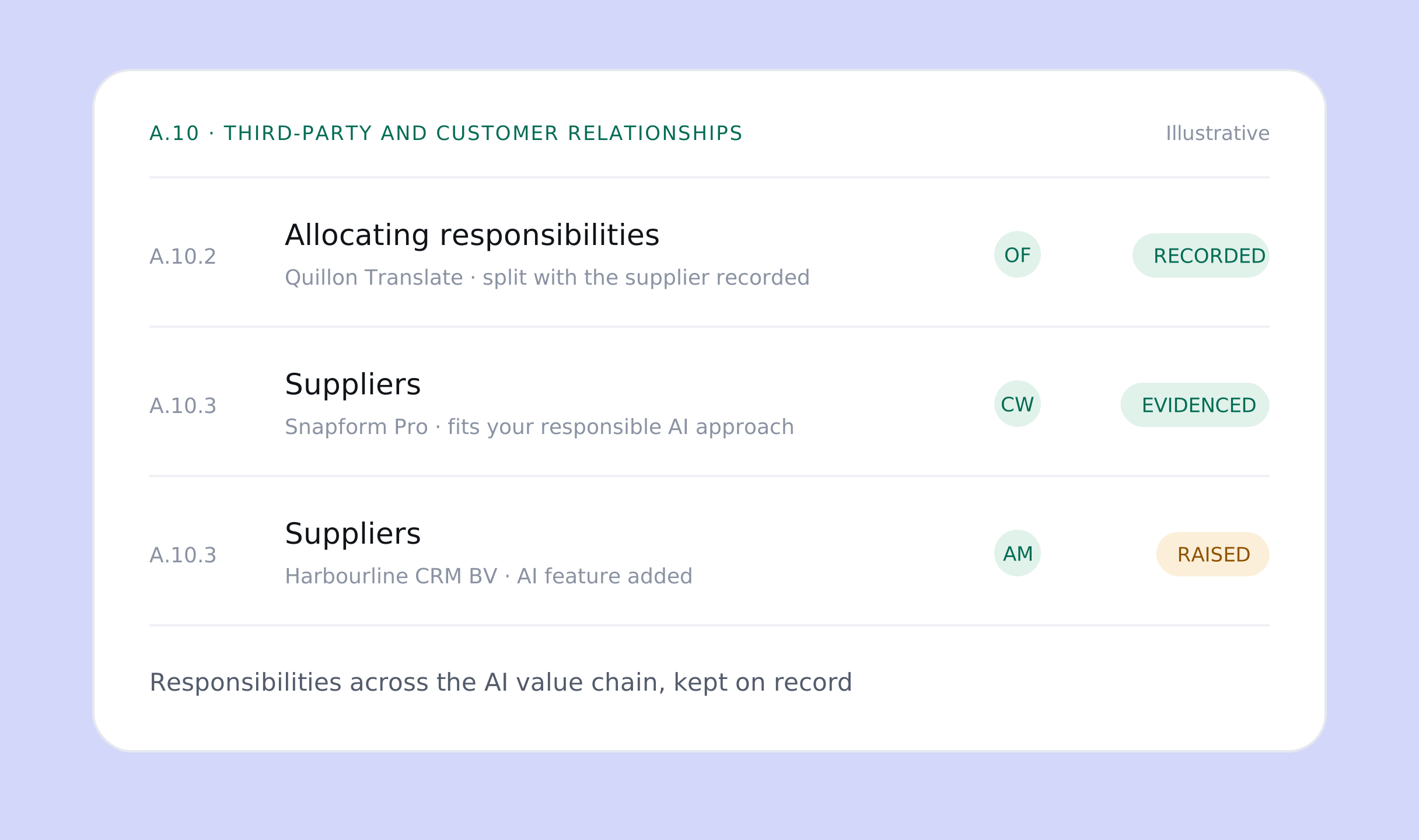
Annex A.10 covers sharing responsibilities across the AI value chain, and making sure what suppliers provide fits your approach to responsible AI.
How Montro helps
Montro keeps the AI services you use beside your other suppliers, so your A.10 supplier controls draw on the same entries as your ISO 27001 and EU AI Act records.

For each AI service, your team records what the supplier is responsible for and what stays with you, as control A.10.2 asks.
When a tool you approved adds an AI feature, it comes back to its owner with the supplier’s notice as the source, so the impact assessment can be revisited.
When an AI service stops being used, Montro raises it for re-tiering, with the decisions behind it kept for your next review.
What you get
Records your AI team would otherwise rebuild before every review.
Impact
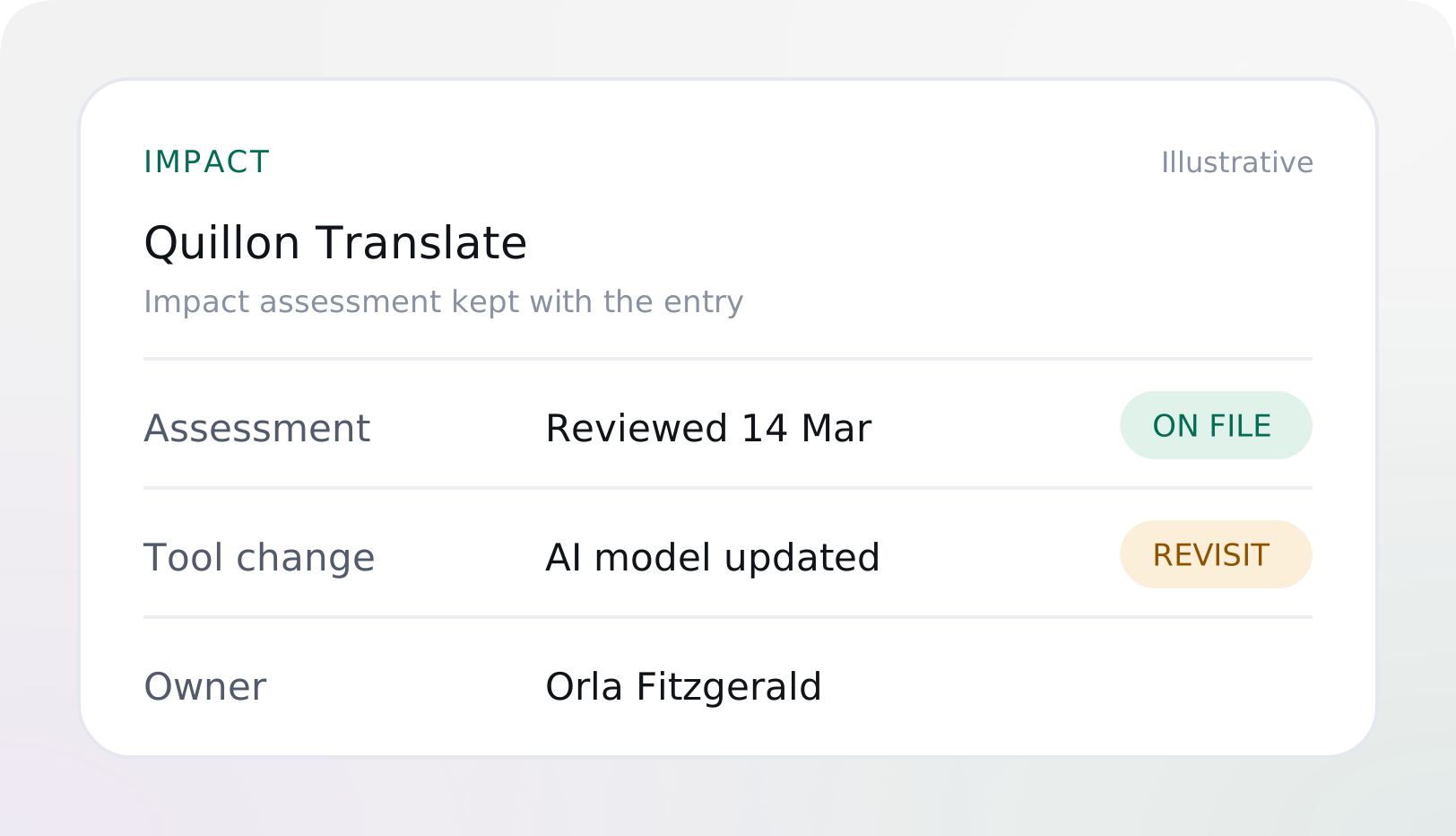
Each AI system’s impact assessment sits with its entry, so a change to the tool points straight to the assessment it may affect.
Use
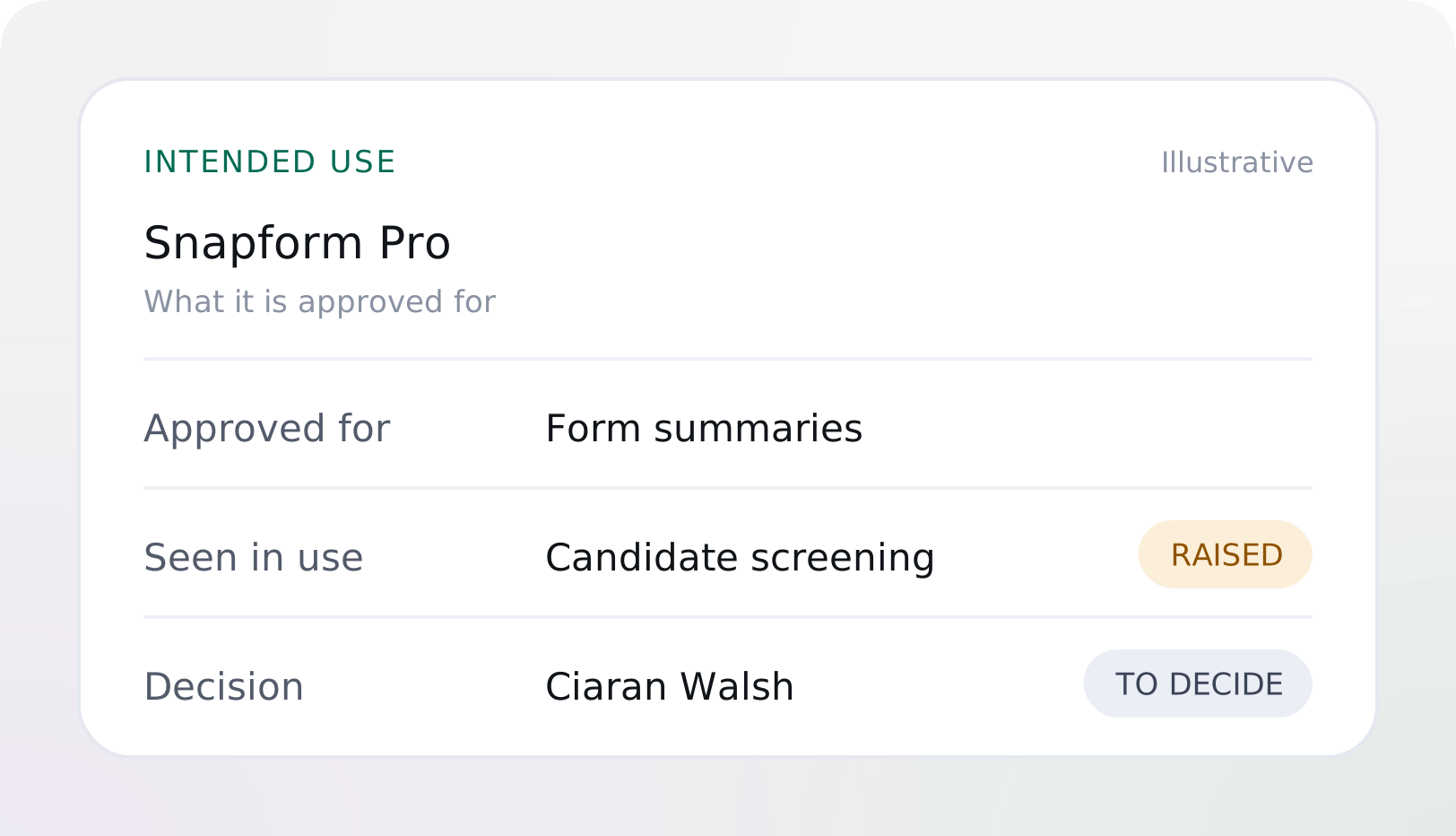
What each AI system is approved for is recorded, so use beyond that purpose is easier to spot and decide on.
Overlap
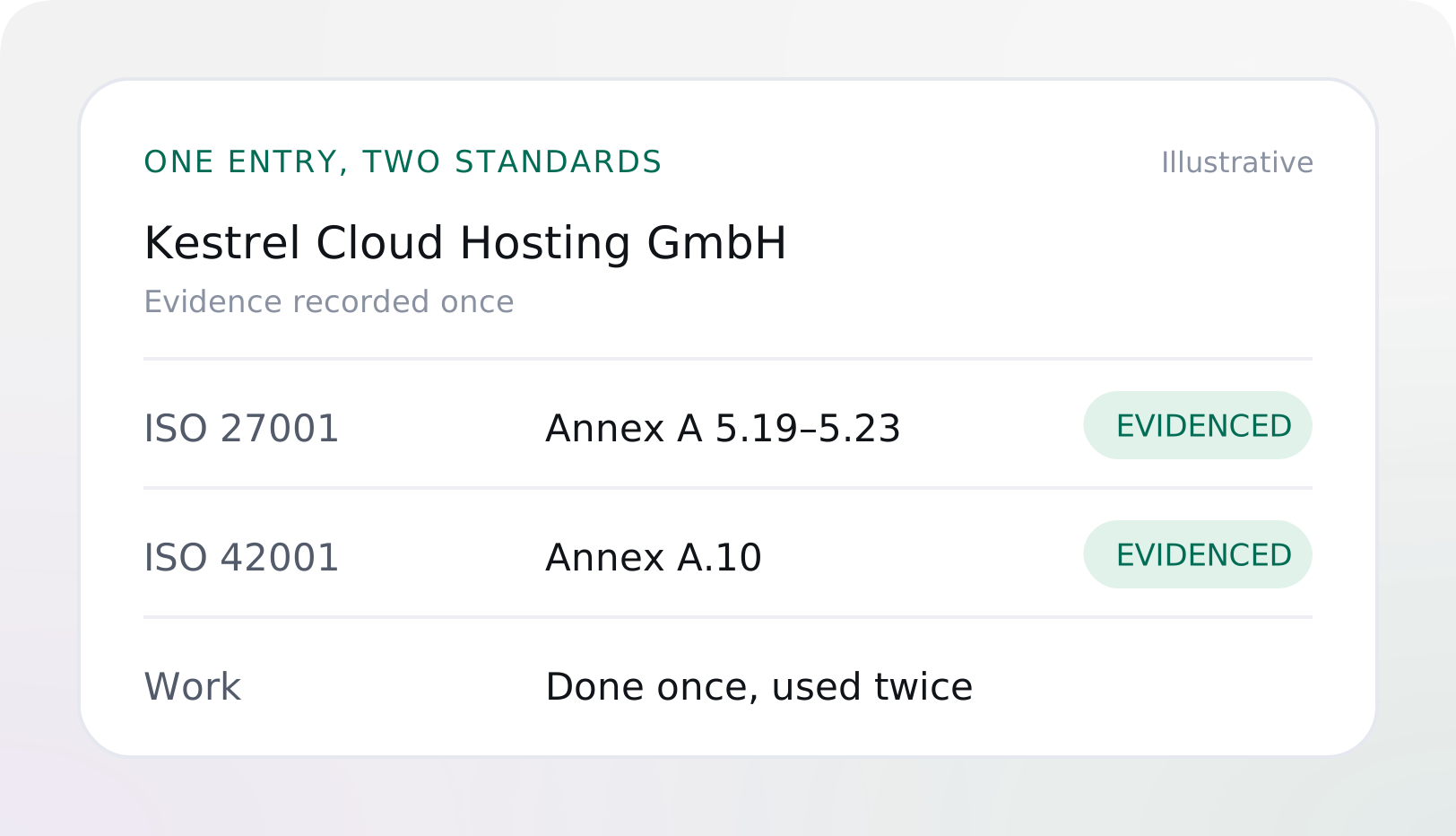
Because ISO 42001 and ISO 27001 share a structure, one supplier entry can carry evidence for both without doing the work twice.
Findings
In regulated sectors, a growing share of the AI that matters most is bought in, and firms lean on what suppliers tell them about it.
53%
of high-materiality AI systems are supplied by third parties
Up from 35% two years earlier.
81%
rely on vendor assurance and contracts to understand those systems
Only 24% report deep knowledge of third-party AI, against 77% for systems built in-house.
68%
keep a central inventory of their AI systems
Rising to 92% when partial or in-progress inventories are included.
Questions about ISO 42001, and how Montro keeps the AI suppliers behind it.
Keep reading
AI suppliers usually fall under more than one framework. These pages cover the closest.

The law that decides your duties for each AI system, by your role and the system’s risk.
Read more
AI services that use personal data also need a place in your record of processing.
Read moreThe security standard ISO 42001 is built to sit beside, with the same clause structure.
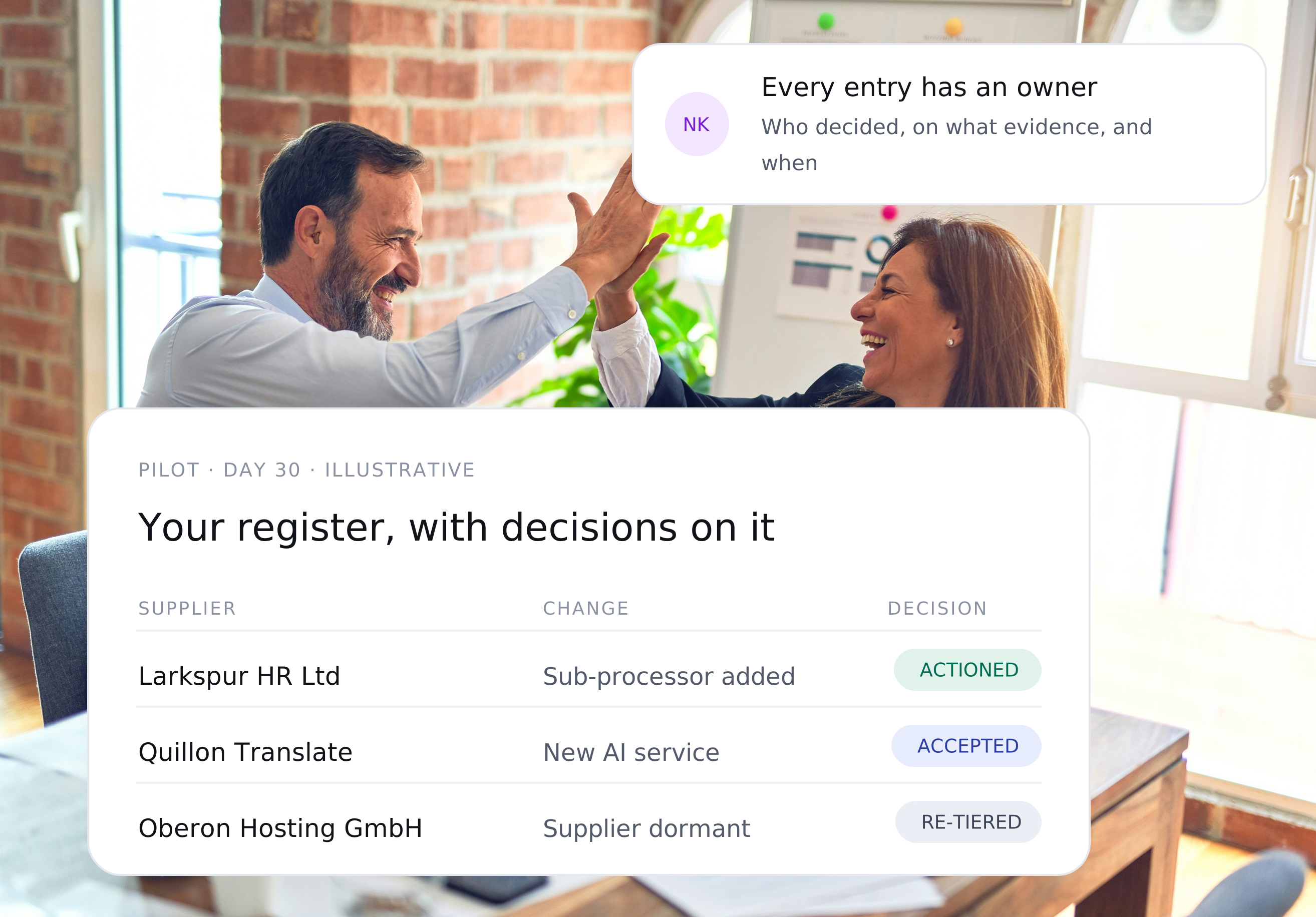
Read moreThird-party records are becoming decision logs. The firms that get this right will be the ones that can show who decided, on what evidence, and when.
A read-only connection, about an hour to set up, and a named person who can say yes to a decision.
Priced to scope — never per seat, never per supplier. Upgrade only when the evidence earns it.