Record
Article 30: record of processing
Processors keep their own record too, and both are made available to the supervisory authority on request.
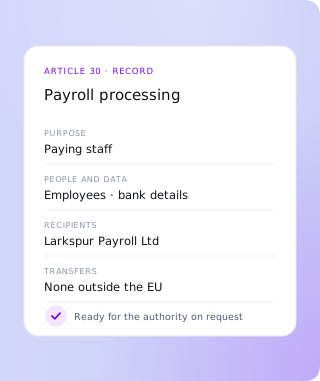
A RoPA (Record of Processing Activities) is the record GDPR Article 30 requires controllers and processors to keep: what personal data is processed, why, who receives it, where it is transferred and how long it is kept. UK GDPR asks for the same record. Article 28 adds a contract with every processor, and your authorisation before a processor brings in a sub-processor.
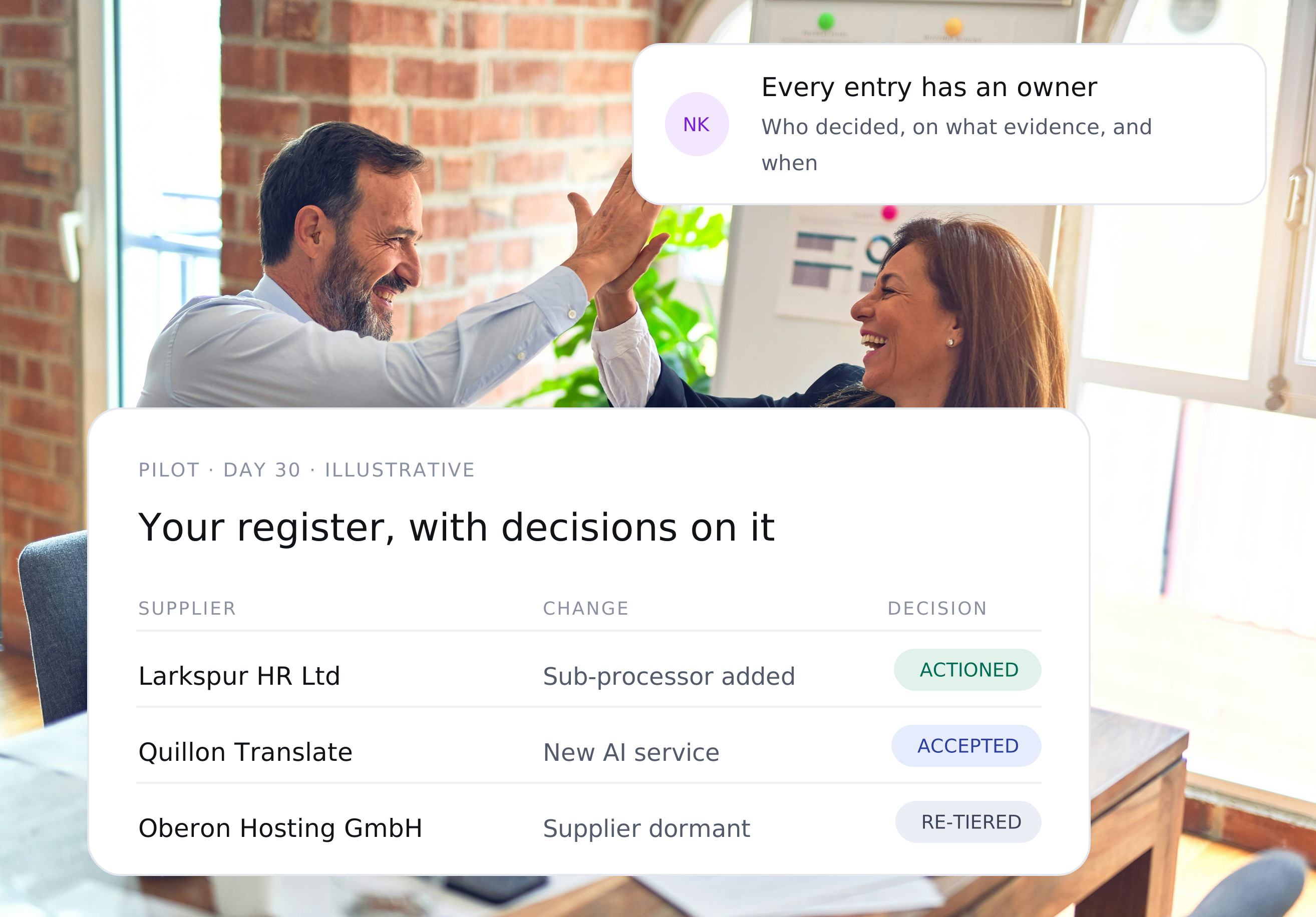
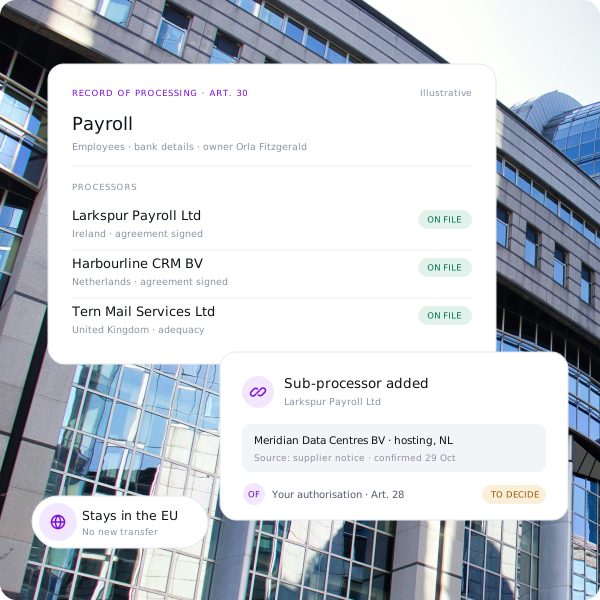
Montro keeps the processor side of that record current. It reads your sign-in, directory and finance systems to propose the suppliers that handle personal data, then raises changes, such as a new sub-processor or processing moved to another country, with their source. The supplier confirms, your team decides, and the record of processing is updated.
Framework
Article 30 requires a written record of processing: what personal data is processed, why, by whom and where it goes, including every processor and sub-processor. Three parts of the regulation shape the record of processing and the suppliers behind it.
Record
Processors keep their own record too, and both are made available to the supervisory authority on request.
Processors
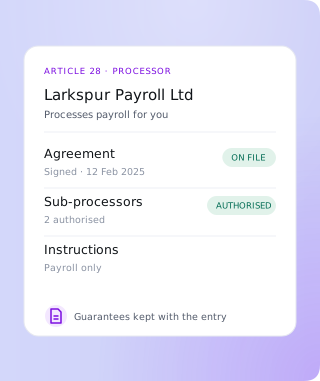
Processors must offer sufficient guarantees, and the contract sets out what they may do with the data.
Transfers
Personal data sent abroad needs an adequacy decision or another recognised safeguard.
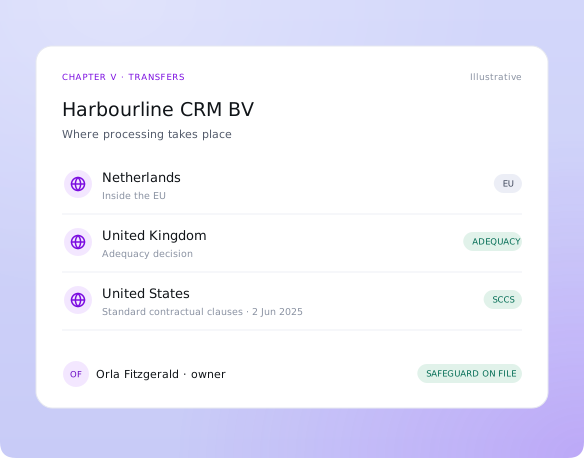
Discovery
Montro keeps each processor’s entry linked to the processing it supports, so your team reviews one record instead of rebuilding it each year.
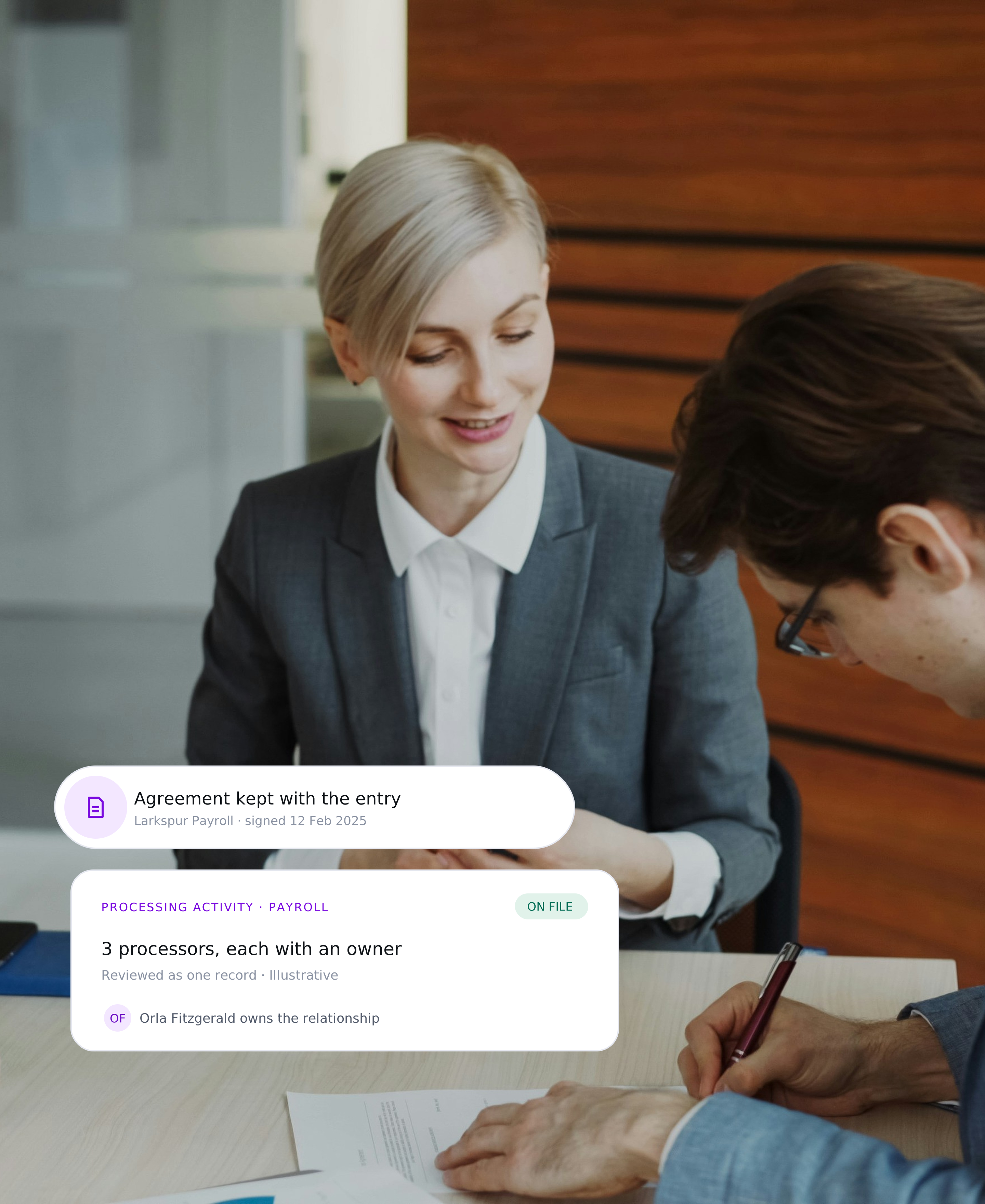
Each activity in the record shows which processors handle the data and who owns the relationship.
The processing agreement sits with the processor’s entry, so a missing or expired agreement is easy to spot.
When a processor stops being used, Montro raises it. Your team re-tiers the entry, and its history stays.
What you get
Three answers your team won’t need to chase.
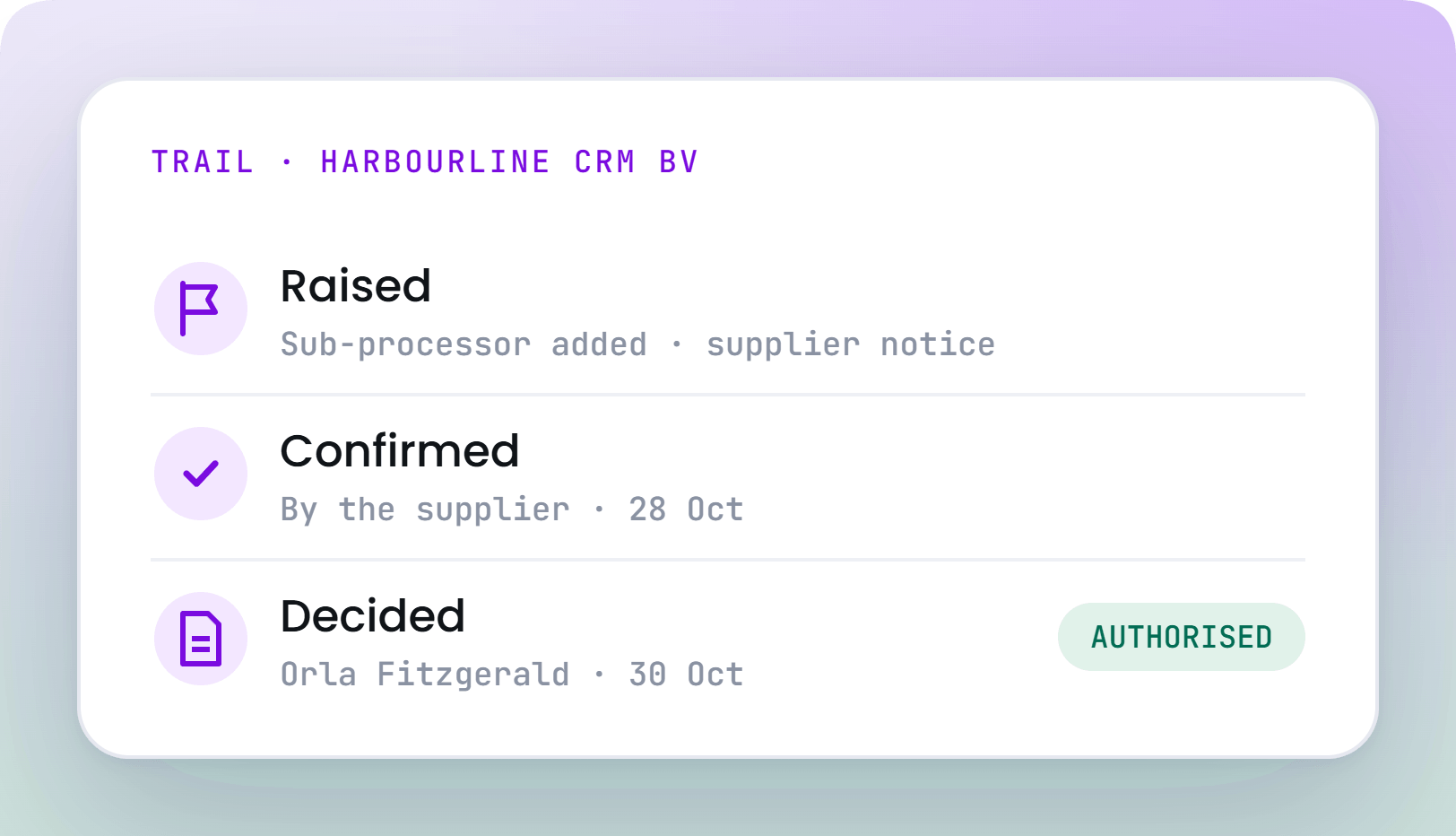
Accountability
Each update keeps its source, the supplier’s reply and your team’s call, so you can show how the record was kept.
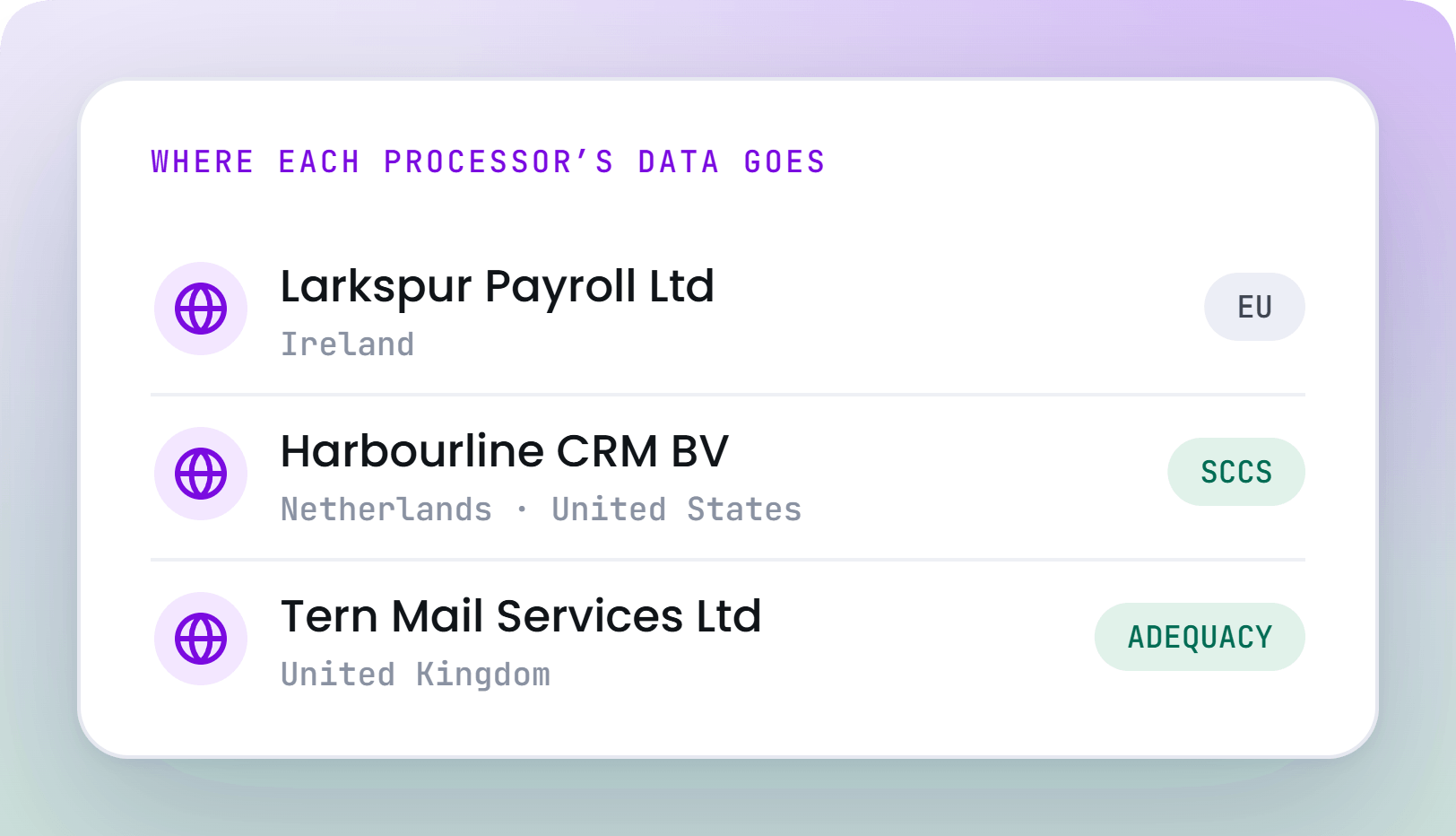
Transfers
Each entry records the countries where processing takes place, so a transfer question has a ready answer.
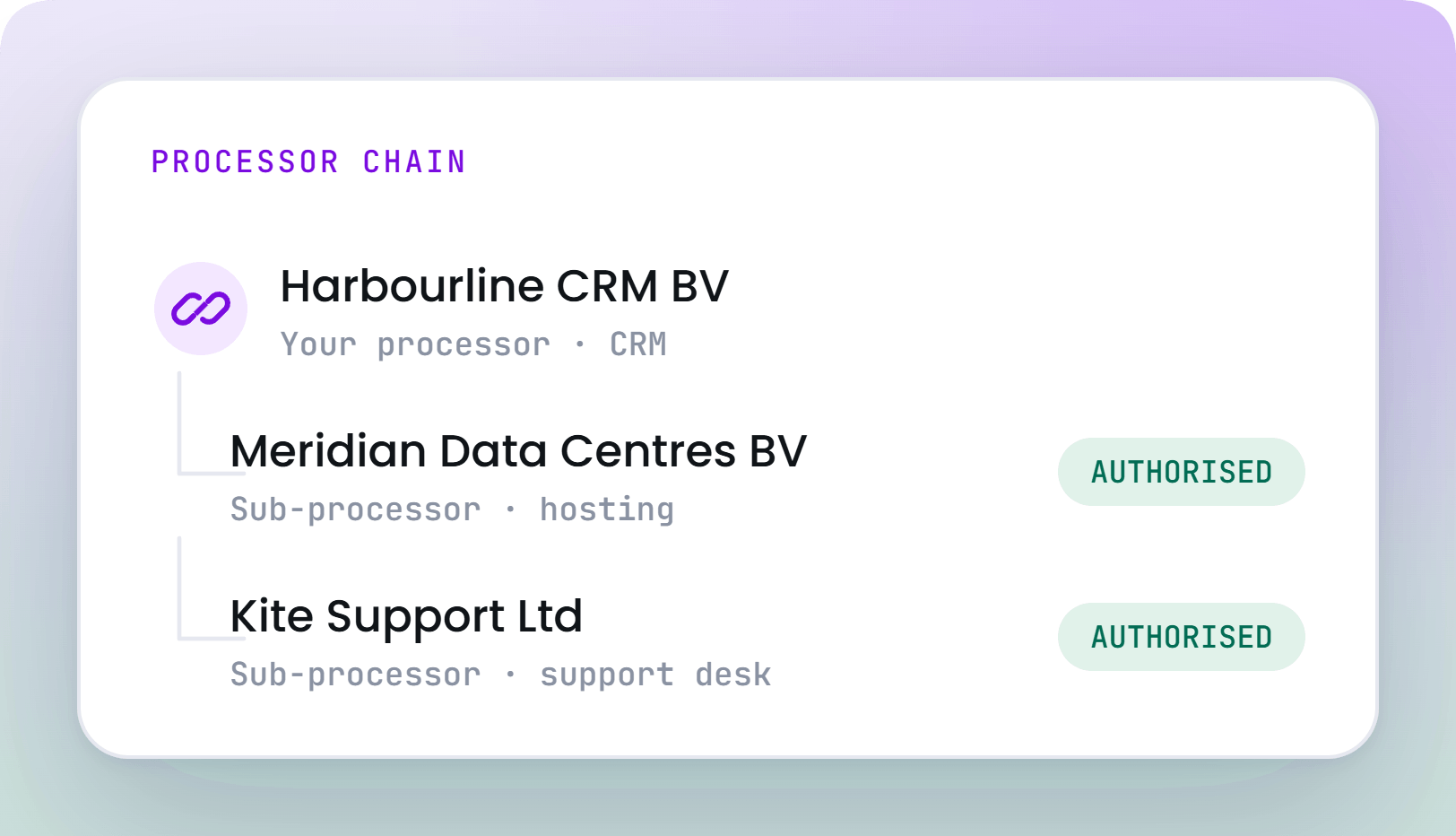
Sub-processors
Sub-processors sit under the processor that uses them, so you can see who handles your data further down the line.
In numbers
Breach notifications keep rising, and the EDPB expects controllers to see past their direct processors.
443
personal data breaches notified per day
Average across 16 European countries, January 2025 to January 2026.
22%
year-on-year rise in breach notifications
Up from an average of 363 a day the year before.
Oct 2024
EDPB opinion on processing chains
Controllers should have ready access to details of all sub-processors in the chain, not only their direct processors.
What the record holds, how Montro keeps it current, and where your data sits.
Keep reading
The suppliers in your Article 30 record often answer to other rules as well. Read how each one applies.

AI systems that use personal data fall under both laws, so your AI inventory and your record should agree.
Read more
For financial entities, many processors are also ICT third-party providers in the register of information.
Read more
Processors behind your network and information systems also belong in your NIS2 supply-chain record.
Read moreThird-party records are becoming decision logs. The firms that get this right will be the ones that can show who decided, on what evidence, and when.
A read-only connection, about an hour to set up, and a named person who can say yes to a decision.
Priced to scope — never per seat, never per supplier. Upgrade only when the evidence earns it.