
A register shaped by your sector's rules
Which registers you keep, which suppliers matter most and who asks about them all depend on your sector.
Industries
Find your page
Each page covers the registers, the suppliers and the questions specific to one sector or stage.
Sector
Financial Services
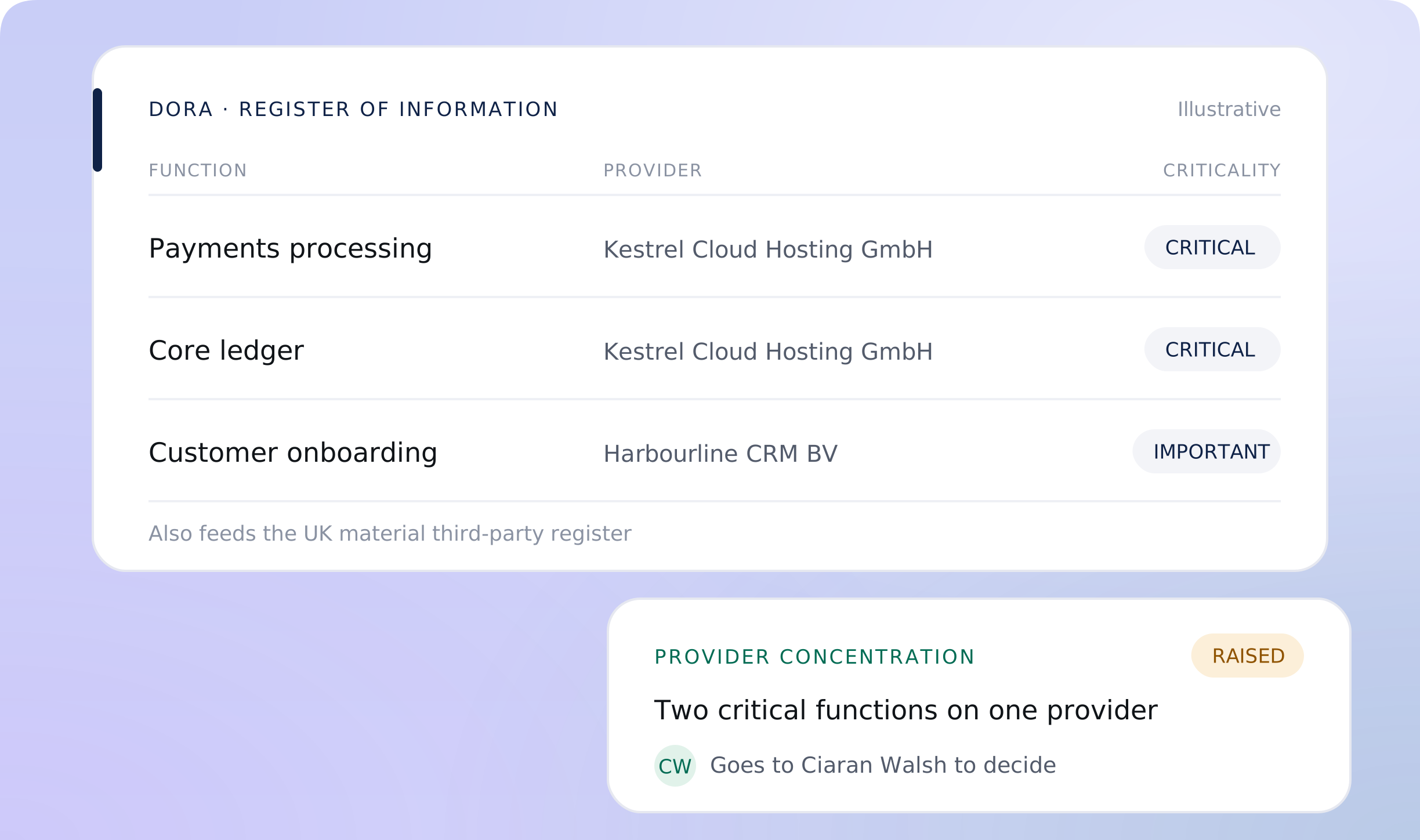
How banks and insurers keep the DORA register, plan for UK third-party rules and spot provider concentration.

Fintech
How payment and lending firms keep a DORA register from authorisation, and handle partner-bank reviews.


Healthcare
How care providers track the suppliers that handle patient data, under GDPR, NIS2 and the EU AI Act.

Tech Scale-ups
How software companies answer their customers' questions about sub-processors, data locations and AI.

Professional Services
How law, accountancy and advisory firms show clients which suppliers and AI tools handle their data.
Who asks
One answer, whoever is asking
A supervisor, a partner bank, a patient or a client each asks about your suppliers in a different way. Montro keeps the source and the decision behind each entry, so the answer holds up whoever is asking.

Across sectors
How sectors differ on supplier risk
Readiness for supplier incidents varies widely between sectors, and many of the suppliers involved are smaller service providers. That's why the register looks different in each industry.
73%
of organisations targeted in 2025 were NIS2 essential or important entities
So the sectors NIS2 names are the ones most often in the line of fire.
81%
of banking organisations feel prepared for supply-chain incidents
The only sector to say so. In others, over a third said they weren't ready.
43%
of managed service providers had no cybersecurity testing in the past year
Many of them are suppliers to other sectors, which is why their own assurance belongs on the entry.
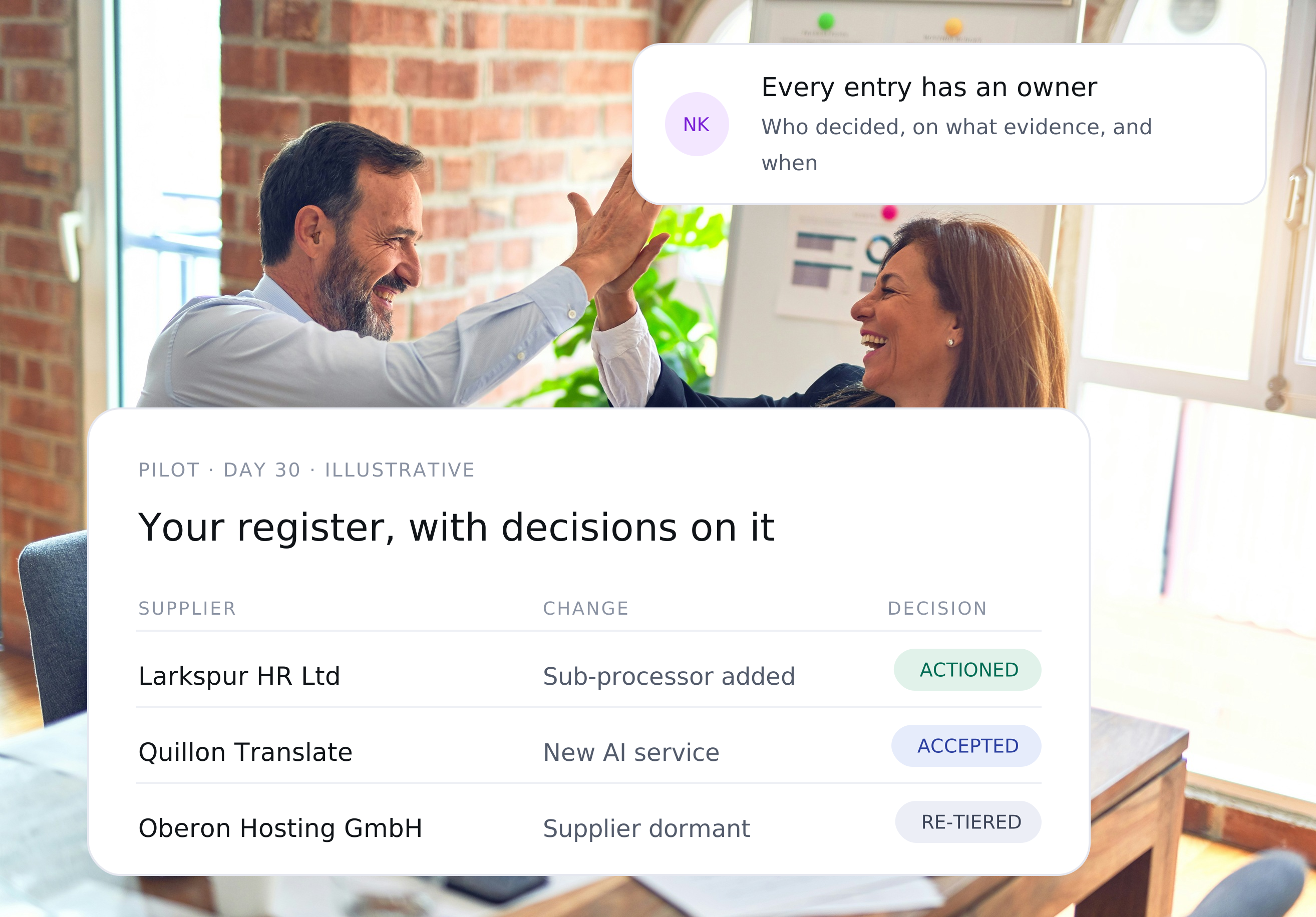
Third-party records are becoming decision logs. The firms that get this right will be the ones that can show who decided, on what evidence, and when.
- Pen-test summary on request
- Frankfurt hosting
- Sample register
- Expert Series guests
- Cyber Ireland member
See it on your own suppliers
A read-only connection, about an hour to set up, and a named person who can say yes to a decision.
Priced to scope — never per seat, never per supplier. Upgrade only when the evidence earns it.
Questions
What your sector's compliance leaders ask us most