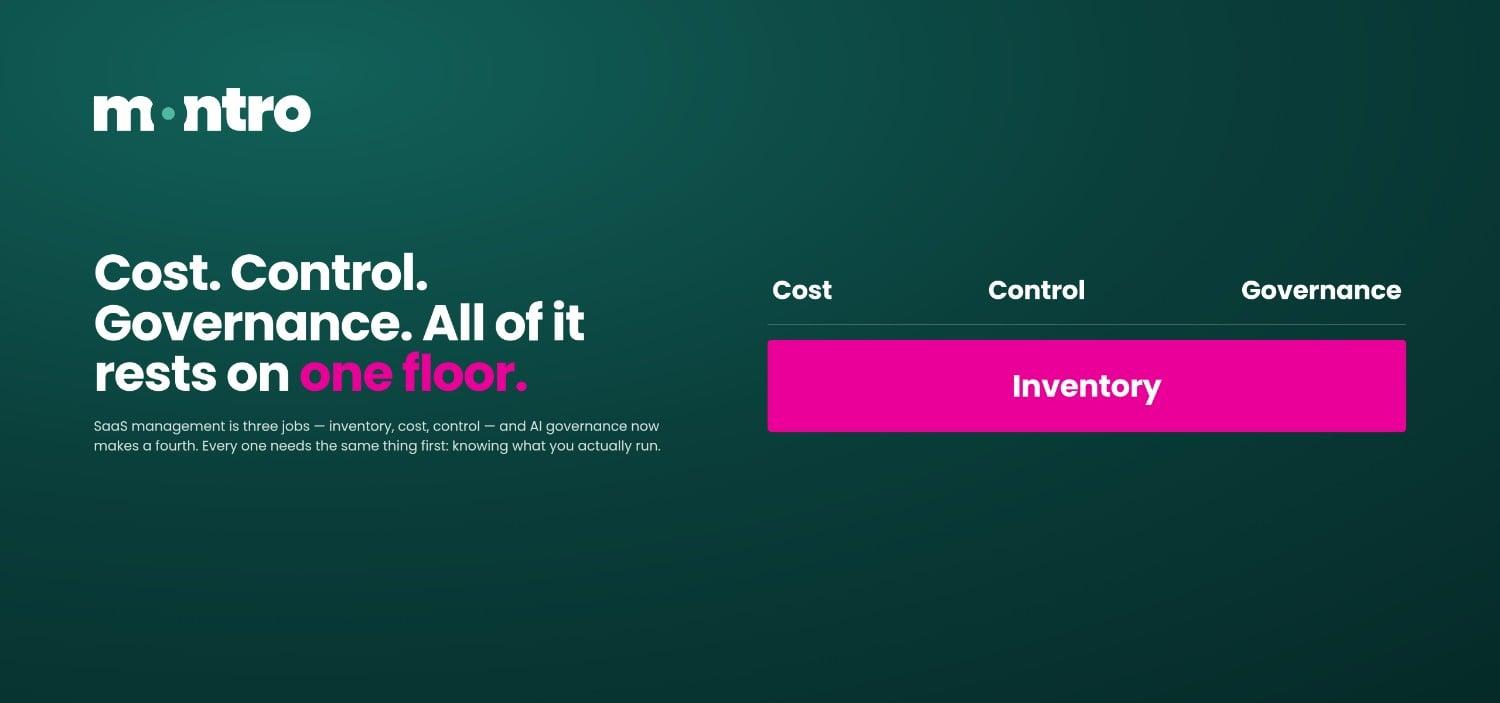
TL;DR: SaaS management comes down to three jobs: knowing what software you actually run (inventory), knowing what it costs and whether that spend is justified (cost), and deciding who can adopt, access and retire it (control). Most organisations do the cost job first because the bill is visible, but it is the inventory job that everything else depends on - you cannot cost or control software you have not found. And once AI enters the picture, the same inventory becomes the foundation that AI governance is built on.
Ask an IT leader what SaaS management is and you will usually get an answer about spend: cutting duplicate subscriptions, catching auto-renewals, trimming unused licences. That is part of it, and it is the part with an obvious number attached. But spend is only one of three jobs SaaS management actually has to do, and it is not the one the other two depend on.
The three jobs are inventory, cost, and control. They are worth separating, because organisations tend to be strong at one, passable at a second, and quietly blind on the third, and which one they neglect is usually the one that matters most.
Job one: inventory - knowing what you actually run
The first job is the one everything else sits on: knowing what software the organisation is actually running. Not what it has contracts for, not what procurement approved, but what is genuinely in use right now.
This is harder than it sounds, and most organisations are worse at it than they think. Industry analyses consistently find that IT is aware of only a fraction of the SaaS an organisation actually runs, with the rest arriving through individual sign-ups, departmental cards and tools that were never formally procured.
The gap between the inventory IT maintains and the software actually in use is where almost every SaaS problem begins.
The reason inventory comes first is simple: the other two jobs are impossible without it. You cannot cost software you do not know you have, and you cannot control an application you have never seen. An inventory built only from procurement records describes the SaaS the organisation remembered to buy formally - which is systematically not the SaaS most likely to cause trouble.
Job two: cost - knowing what it costs, and whether that is justified
The second job is the visible one: understanding what the SaaS estate costs and whether that spend is earning its keep. This is where most SaaS management effort goes, because the bill is concrete and the savings are easy to point at.
Done well, the cost job is more than catching unused licences. It is connecting licence counts to actual usage, spotting the overlapping tools that do the same thing, catching the renewal before it rolls over at a bad price, and seeing the per-seat spend that crept up as a team grew.
The recurring finding across the industry is that a meaningful share of SaaS spend is recoverable once an organisation can actually see it - commonly cited in the range of a fifth to a quarter of total spend in the first year of looking properly.
But notice the dependency again: every one of those savings requires the inventory to be complete. The cost job can only optimise the software it can see, which is why an organisation that jumps straight to cost-cutting without fixing inventory first is optimising a fraction of its estate and calling it the whole.
Job three: control - deciding who adopts, accesses, and retires
The third job is the one organisations most often neglect, because it has no obvious number and feels like bureaucracy: deciding, deliberately, who can bring in new software, who can access what, and how tools get retired when they are no longer needed.
Control is what stops the inventory problem from regenerating. An organisation can run a discovery exercise, build a clean inventory, cut the wasted spend - and be right back where it started a year later if nothing governs how new tools enter.
Control is the difference between a one-time tidy-up and a managed estate. It covers the approval path for new software, the access and offboarding that keep licences from leaking, and the retirement process that stops the estate silently accreting tools nobody uses.
Control is also where SaaS management stops being purely a finance exercise and becomes a governance one - which is the bridge to what comes next.
Where AI changes the picture
Everything above predates the current wave of AI, and all of it still holds. What AI adds is to raise the stakes on the same three jobs, and to turn the inventory from a cost tool into something more.
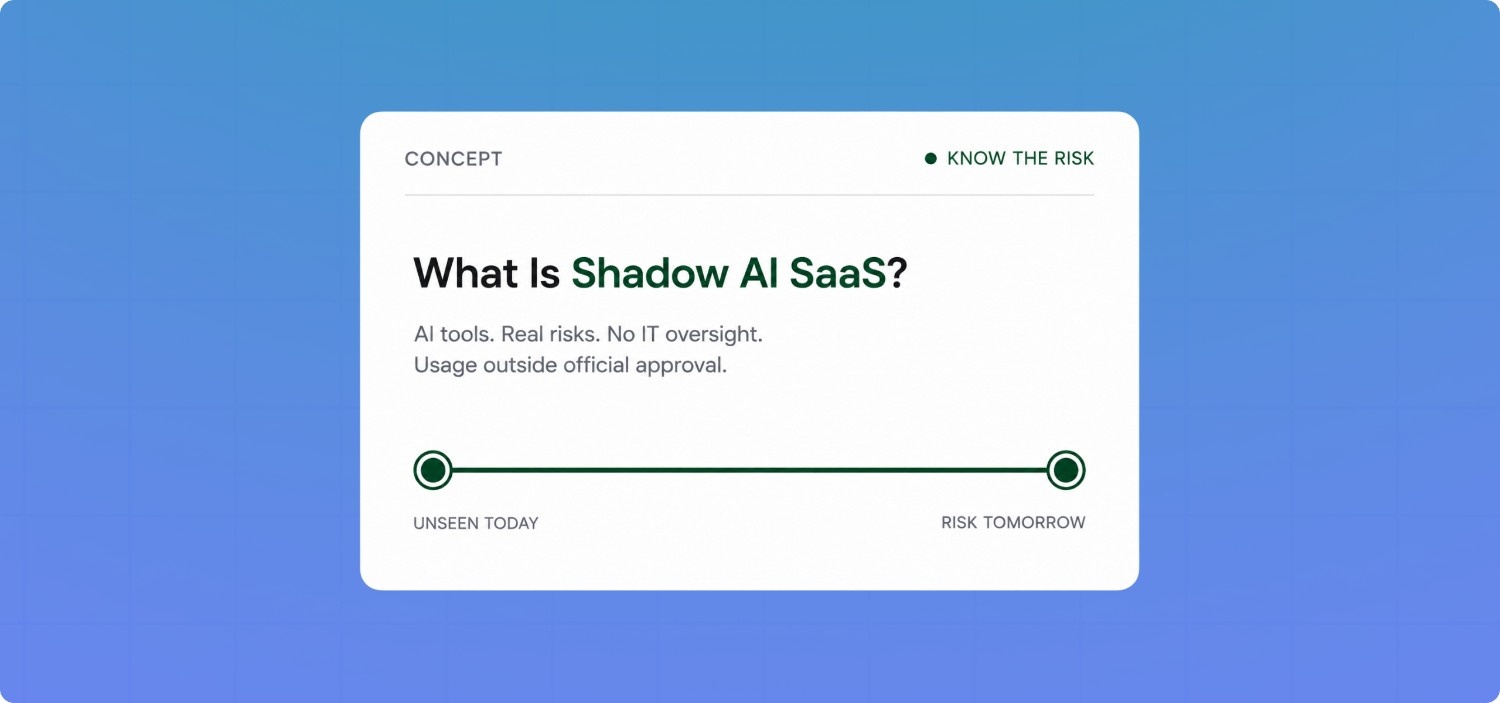
AI arrives in the SaaS estate the same way shadow SaaS always has - through features switched on inside tools you already run, through sign-ups nobody recorded. But it carries consequences ordinary SaaS does not: it processes data through models, it can fall under regulation, it creates obligations a dormant subscription never would.
The same inventory that tells you what you are spending now has to tell you something more demanding: which of your tools are doing things that are governed.
This is the connection worth ending on. SaaS management and AI governance are not two separate disciplines competing for the same budget. SaaS management produces the inventory of what the organisation runs; AI governance is what you build on top of that inventory once some of what you run is AI.
The inventory job was always the foundation of cost and control. In an AI world, it becomes the foundation of governance too - which means the organisation that never solved inventory is now missing the floor under three things, not two.
The through-line: it all rests on inventory
Read the three jobs together and the pattern is clear. Cost depends on inventory. Control depends on inventory. And AI governance, when it arrives, depends on inventory as well. The job with no headline number, knowing what you actually run - is the one that quietly determines whether the other jobs are even possible.
That is the real lesson of SaaS management, and it is why the organisations that handle it well are not the ones that cut the most spend. They are the ones that got the inventory honest first, and built cost, control and, now - governance on top of a picture that was actually complete.
Frequently asked questions
What is SaaS management?
Montro's definition: SaaS management is the practice of knowing what software an organisation runs, what it costs, and who controls it - three jobs usually summarised as inventory, cost, and control. Inventory is knowing what is actually in use; cost is understanding and optimising the spend; control is governing who can adopt, access and retire software. The three are dependent: cost and control both rest on having a complete inventory first.
What is the difference between SaaS management and SaaS expense management?
SaaS expense management is one part of the broader discipline - specifically the cost job: tracking, auditing and optimising what the SaaS estate costs. SaaS management is wider, covering inventory (knowing what you run) and control (governing adoption, access and retirement) as well as cost. A firm that only does expense management is optimising spend on the software it already knows about, without necessarily solving the inventory and control problems underneath.
Why is a SaaS inventory so hard to get right?
Because much of an organisation's SaaS never goes through procurement. Tools arrive via individual sign-ups, departmental cards, free tiers that grow, and features switched on inside existing platforms - none of which appears in the contract records most inventories are built from.
Industry analyses consistently find IT is aware of only a portion of what an organisation actually runs, which is why an inventory built from procurement data alone is systematically incomplete.
How does SaaS management relate to AI governance?
SaaS management produces the inventory of what an organisation runs; AI governance is built on top of that inventory, for the portion of the estate that is AI. The same discovery that underpins cost and control also underpins governance, you cannot govern an AI tool you have not found.
So the two are layered, not competing: SaaS management is the floor, and AI governance is what stands on it once some of the software is doing things that are regulated.