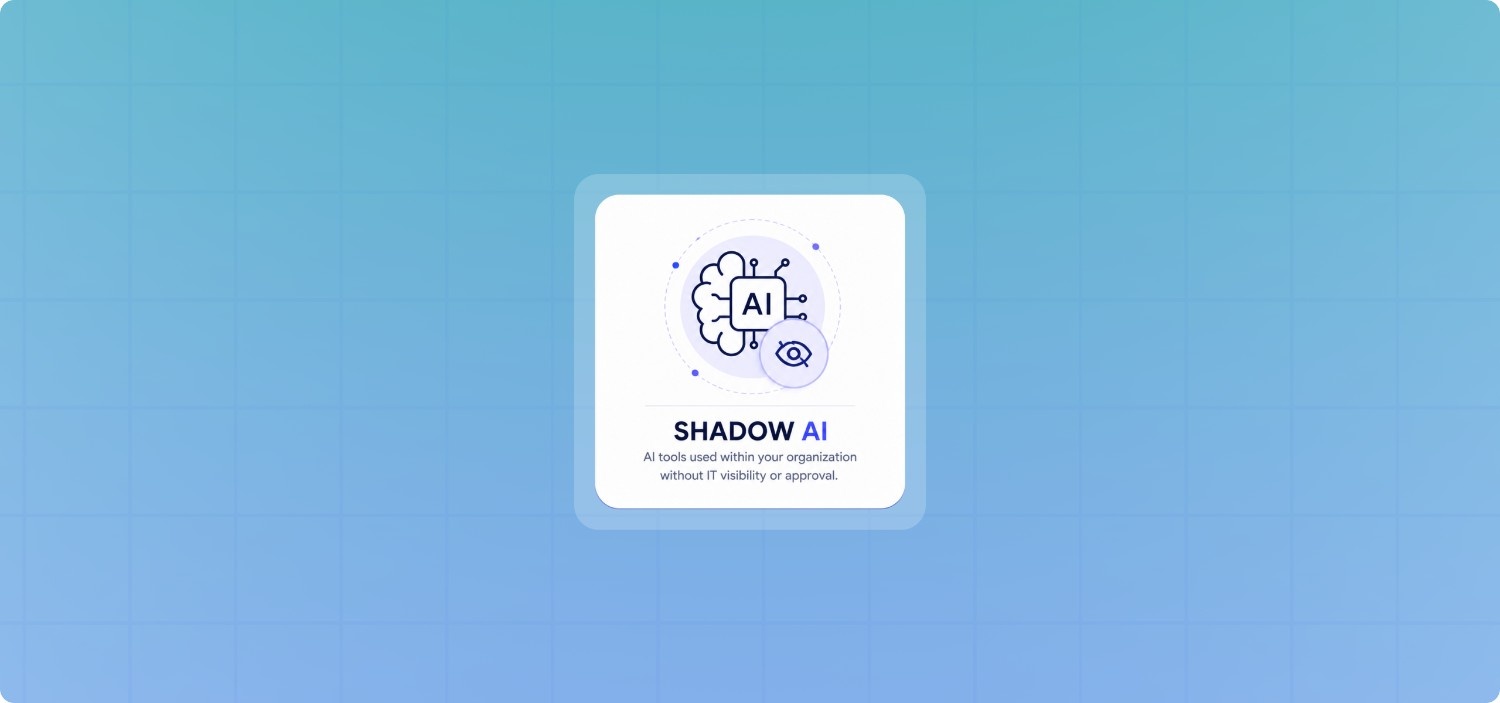
Shadow IT is not a new problem. Shadow AI is.
The tools are the same category, software employees adopt without telling IT. The regulatory consequence is not the same category at all. An unapproved project management tool in 2019 was a procurement gap. An unapproved AI tool in 2026 is a live GDPR violation, a potential DORA exposure, and depending on the use case, an EU AI Act obligation your organisation never registered.
The Procurement Bypass Has Not Changed. What the Tools Do Has.
Employees adopt tools outside IT for the same reasons they always have. The procurement process is slow, the tool solves a real problem, and waiting is not an option when there is a deadline. A relationship manager needs meeting summaries turned around faster. A credit analyst wants to pre-screen applications before a busy review cycle. A compliance officer uses an AI tool to interpret regulatory guidance quickly. None of them are being reckless. They are solving real problems with the fastest tool available.
What has changed is that the tools they are reaching for are AI systems. They do not just store task lists or share files. They process personal data. They generate outputs that influence decisions. And they sit inside regulatory frameworks that your organisation is accountable for, regardless of how the tool arrived.
A tool an employee signed up for on a personal account and uses to summarise client meetings is not just an ungoverned SaaS subscription. It is an uncontracted data processor under GDPR Article 28, no Data Processing Agreement means no lawful basis for the processing, active now. If your organisation is a financial entity, it is also an unregistered ICT service under DORA Article 28, enforceable since January 2025. If the use case touches employment decisions, credit assessment, or access to essential services, it is a potential high-risk AI system under EU AI Act Annex III, with Article 26 deployer obligations the organisation has never documented.
One tool. Three frameworks. The employee who signed up was solving a productivity problem. The organisation is carrying the regulatory exposure.
Why Standard Discovery Misses It
Most IT and security teams believe their SSO logs and software asset inventories give them a reasonable picture of what is in use. They do not.
SSO logs show what employees authenticated into using work credentials. They show nothing about the AI writing tool on a personal Gmail account, the browser extension installed on a work laptop without IT approval, the meeting summariser a team has been running on a free tier for the past six months, or the AI feature a SaaS vendor quietly enabled inside a platform the organisation already uses, the exact population that any serious shadow IT discovery programme has to be built to reach. These tools do not appear in procurement records because they were never procured through IT. They do not appear in expense reports because many are free. They do not appear in SSO logs because they were never connected to the identity provider.
IBM's Cost of a Data Breach Report 2025 found that one in three breaches involves shadow IT, at an average breach cost of $4.88 million. Harmonic Security found that 16.9% of sensitive data exposures occur specifically on personal free-tier accounts, the exact category that falls outside every standard discovery method.
The tools creating the most regulatory exposure are the ones IT is least likely to find, and the ones that fall outside every standard software asset management approach.
What Effective Discovery Actually Requires
A policy questionnaire produces a list of tools employees remember using and are willing to disclose. That is not an application inventory.
Effective shadow AI discovery combines multiple data sources run together. SSO log analysis surfaces tools employees authenticated into with work credentials. DNS traffic analysis surfaces AI endpoints employees are hitting regardless of account type. Expense and corporate card data surfaces subscriptions purchased outside IT channels. Browser extension audits surface AI tools installed at the browser level that bypass every other method. Each method surfaces a different slice of the environment, which is why SaaS discovery that draws on all four simultaneously is the only approach that produces a reliable picture. The tools that matter most are the ones that fall between all four.
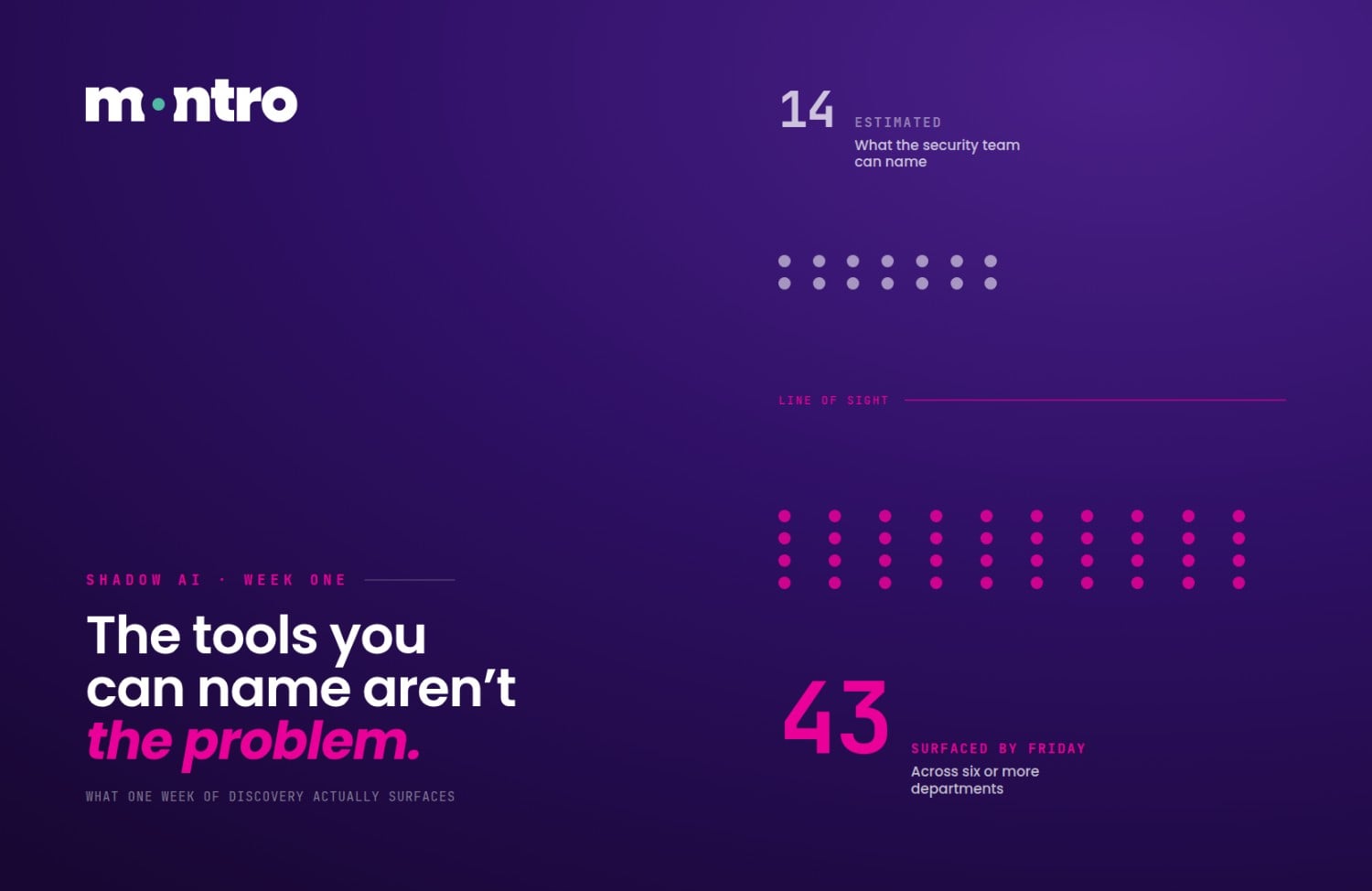
In every discovery exercise we run, the number of AI tools in active use is significantly higher than what IT believed, the structural consequence of AI adoption moving faster than software asset management processes were built to handle. The gap is not recklessness. It is the structural consequence of AI adoption moving faster than procurement.
Once the inventory exists, three questions determine the governance action for each tool.
Does it process personal data, and is there a signed DPA with the vendor?
Is it an ICT service under DORA, and does it appear in the ICT Third-Party Register?
Does the use case touch Annex III categories - employment decisions, credit assessment, access to essential services, biometric identification, and has the EU AI Act classification been completed?
These questions take minutes per tool once the inventory is in place. The inventory is the hard part.
What Montro Finds in Discovery Exercises |
The shadow AI tools Montro identifies are often not unique. In most cases the organisation already had a contracted, governed version of the same capability ; a licensed AI writing tool, an enterprise meeting summariser, a procured analytics platform. The employee did not go to IT because IT couldn't help, but because waiting three weeks for procurement approval was not an option when the work needed doing now. The governance response that works is the one that closes the speed gap, not just the compliance gap. |
The Response That Works
Banning tools does not work. It drives adoption underground and reduces disclosure. When employees cannot use the tool they need and procurement takes weeks, they find a workaround. The policy exists. The shadow tool exists. Nobody connects them.
The organisations getting ahead of this are the ones making sanctioned alternatives genuinely better than the shadow options, procured at the right tier, provisioned through SSO, with the DPA signed and the ICT register entry in place. They are also running continuous discovery rather than a one-time audit. New AI tools arrive every month. The regulatory exposure begins the moment an employee starts using them, not the moment IT finds out.
The procurement bypass behaviour will not stop. What can change is how quickly IT finds it and what happens next.
Frequently Asked Questions
We have an AI acceptable use policy. Does that cover our regulatory exposure?
Only if you can evidence it was followed. A GDPR supervisory authority or DORA regulator will not ask for the policy, they will ask for the DPA log, the ICT register, and documentation showing each tool was assessed before use. A policy document without those artefacts behind it demonstrates intent. It does not demonstrate compliance.
Our employees use AI on personal accounts. Does that mean the liability sits with them rather than the organisation?
No. GDPR attaches liability to the data controller based on what data is being processed and by whom, not which account type was used. If an employee processes customer or employee data in a personal AI account, your organisation is the data controller. The personal account removes the Data Processing Agreement. It does not remove the liability.
How do we prioritise which shadow AI tools to address first?
Start with tools that are processing personal data without a DPA, that exposure exists under GDPR regardless of any other framework. Then tools used in financial services functions without ICT register entries, if DORA applies. Then tools where the use case plausibly falls within EU AI Act Annex III. That sequence maps to where enforcement risk is highest and most immediate.
We ran an SSO audit last year and it came back clean. Does that mean we have good visibility?
SSO audits only surface tools employees authenticated into using work credentials. Personal accounts, browser extensions, free-tier tools, and AI features embedded inside existing SaaS platforms do not appear in SSO logs. A clean SSO audit tells you what is connected to your identity provider. It tells you nothing about what is actually running, and it is why shadow IT discovery that runs across all four data layers is the prerequisite for any accurate application inventory.