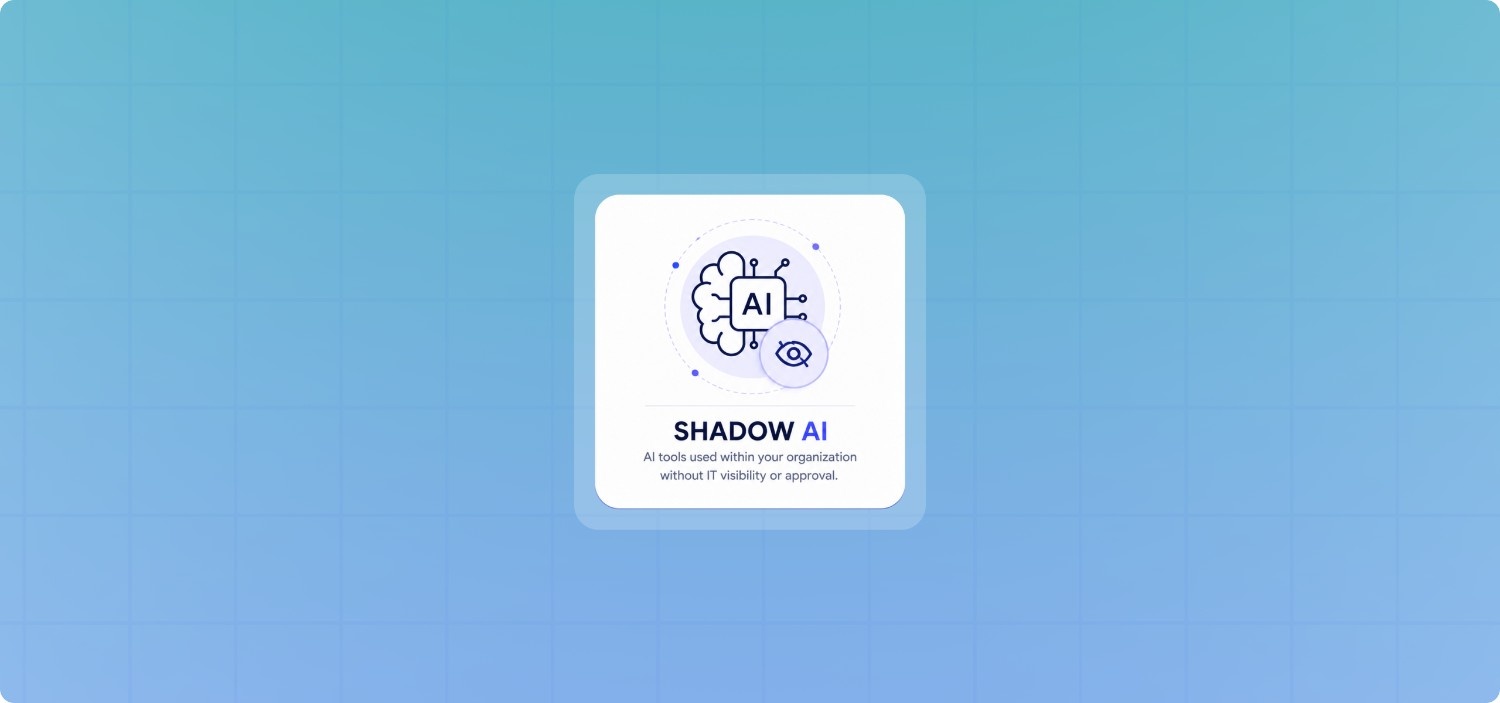
Remote work did not create shadow AI. It created the conditions for shadow AI to scale faster than any governance programme can track.
Before hybrid work became the default, adopting an unsanctioned SaaS tool required a degree of intent. You had to find it, sign up for it, and use it on a device that was probably on the corporate network. There were natural friction points; IT visibility, network monitoring, physical proximity to colleagues who might notice.
That friction is gone. A remote employee with a problem and a company card can have a new SaaS tool running in under ten minutes, on a personal device, through a home network, signed up with a personal email address. By the time that tool appears anywhere on IT's radar, if it ever does, it has been processing work data for weeks.
And here is the part that turns a spend problem into a governance problem: most new SaaS tools now have AI features built in. The tool someone adopted to solve a scheduling problem now summarises meetings. The writing tool someone signed up for now drafts emails using customer data. The project management platform someone chose for its templates now offers AI-generated reports. Every unsanctioned shadow AI adoption is a potential shadow AI adoption, and hybrid workforces are running this process at scale.
Why Hybrid Workforces Outpace Governance By Design
The speed gap between employee adoption and IT governance is not a culture problem. It is a structural one, and hybrid work made it permanent.
In a centralised office environment, SaaS governance could rely partly on proximity. IT teams could see what was being used, have conversations with department heads, and catch unsanctioned tools through network monitoring or help desk tickets. None of that scales to a distributed workforce operating across multiple locations, time zones, and devices.
Three structural dynamics drive the gap in hybrid environments:
Friction Removal
The standard procurement process; raise a request, get IT approval, wait for provisioning, was designed for a world where employees were physically present and operationally patient. Remote workers under deadline pressure do not use that process. They find a tool, put it on the company card, and get on with the job. The approval process, the foundation of any functioning SaaS governance programme, catches up later, if at all. Often it does not.
Device and Network Diversity
A large proportion of hybrid workers use personal devices for at least some work activity, particularly in smaller organisations where BYOD policies are either informal or quietly ignored. When someone is working from a personal laptop, that device is outside MDM coverage, off the corporate network, and has never been enrolled anywhere IT can see. A SaaS tool adopted on that device does not appear in any log. It does not trigger any alert. IT finds out about it, if at all, when something goes wrong.
Time Zone and Asynchronous Adoption
In distributed teams, decisions that would once have involved a quick conversation now happen asynchronously. A team in one geography adopts a tool because it solves a coordination problem across time zones. Nobody in IT is in the loop because nobody in the team thought to put them there, not out of malice, but because the decision happened in a Slack thread at 9pm and the tool was running by morning.
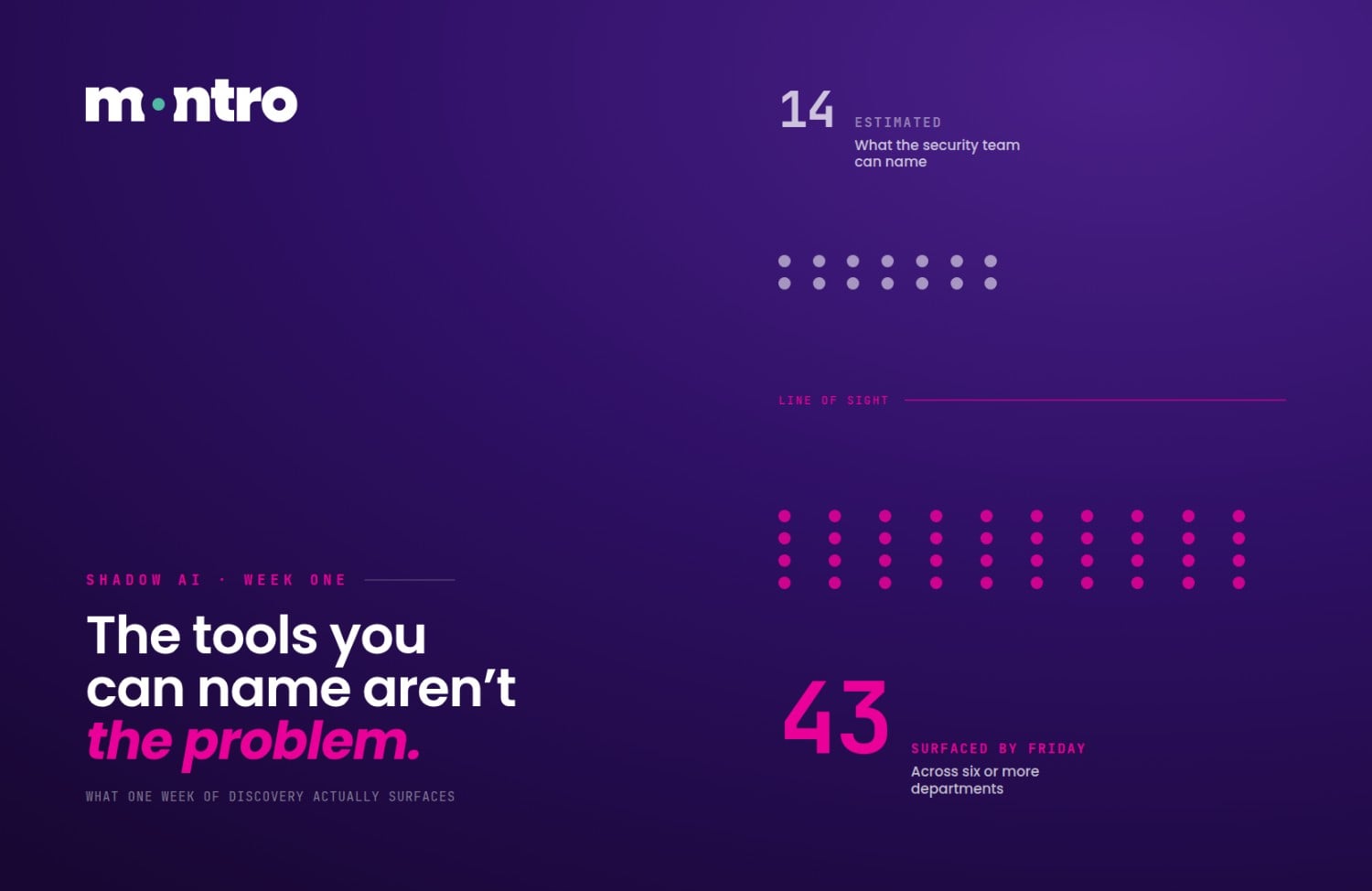
The conversation I have most often with IT Directors goes like this. They come in with confidence because they know their stack, they have Okta, and they run quarterly reviews. We then show them the actual count. Not what is in the IdP, but what is actually running. Usually the number is twice what they anticipated, and sometimes much more. The first reaction is disbelief and the next is trying to figure out how it happened. The answer is almost always the same. The tools did not sneak into their stack, they walked in through the front door: expense approvals, free trials, a team lead who found something useful and shared it over a Slack channel. In a distributed team, that chain happens faster and with less visibility than anyone expects. There is no moment where IT could have caught it, because the whole decision of using that one tool happened at 9pm in a thread that nobody was monitoring. What surprises people most is not the tools themselves, it is how long they have been running. Six months, a year, and sometimes longer. The exposure kept accumulating the whole time, but IT was not being ignorant. The environment just moved faster than the governance. - Ankur Arora, Co-founder, Montro |
The AI Feature Problem: Tools Change After You Adopt Them
There is a particular governance challenge that is specific to AI, and it is one that most IT teams have not fully reckoned with yet.
SaaS tools are not static. They update continuously, and AI features are now the most common category of update being shipped. A project management tool releases an AI summarisation feature. A CRM adds an AI assistant that drafts outreach emails. A document tool introduces AI-generated insights. These features are often enabled by default, or enabled by an administrator who does not realise they are activating AI processing on company data.
The result is a two-stage exposure problem. In stage one, a remote employee adopts a SaaS tool outside the normal procurement process. In stage two, that tool, which IT may not even know exists, gains AI capabilities that are now processing work data without any review, any data processing agreement specific to AI, or any assessment of where that data goes.
This is not a hypothetical. The trajectory of almost every major SaaS platform over the past two years has followed this pattern. Tools that were adopted as productivity utilities are now AI platforms processing sensitive business data. The adoption decision was made months or years ago. The AI processing is happening now.
Where Governance Breaks in Distributed Environments
The standard governance mechanisms that work reasonably well in centralised environments fail in specific, predictable ways in hybrid ones.
SSO as an Inventory Proxy
Most IT teams treat their identity provider; Okta, Azure AD, Google Workspace, as their SaaS inventory. If it is not in SSO, the assumption goes, it is not in use. In a distributed environment that assumption breaks down fast. Remote workers sign up for tools with personal email addresses and never connect them to the corporate IdP. Free-tier accounts have no provisioning flow that IT ever touches. OAuth connections happen in seconds, often without the user understanding what access they have just granted. The result is that the gap between what is in the IdP and what is actually running tends to be wider in remote-first organisations than most IT Directors expect, and it widens further every month.
Personal Account Adoption
Harmonic Security's Q3 2025 analysis of over three million enterprise prompts found that 11.84% of sensitive data exposures occurred through personal or free-tier AI accounts. In hybrid environments that number is likely conservative, remote workers are more likely to encounter a tool in a personal context first and carry it into work use, or sign up on a personal email address out of sheer habit. The data being processed is work data. The account processing - it has no corporate controls, no DPA, and no audit trail.
BYOD and Unmanaged Devices
The BYOD problem is less about policy and more about physics. Network-based monitoring requires the device to be on the network. Agent-based discovery requires the device to be enrolled. In most hybrid organisations, a meaningful slice of daily work happens on devices that meet neither condition, and the tools adopted on those devices are, practically speaking, invisible. The problem is not that IT lacks the will to govern them. It is that the standard toolkit was built for a world where the device was in the building.
What Governance for a Distributed Workforce Actually Requires
The instinct when confronted with a distributed SaaS governance problem is to write a policy. Acceptable use policies, AI tool approval processes, mandatory declaration requirements, these are the standard response. They are also insufficient on their own, for a straightforward reason: policies govern declared behaviour. Shadow AI, by definition, is undeclared.
Gartner estimates the average organisation now runs over 100 SaaS applications, and that figure was established before AI features became a standard part of every product update cycle. In a hybrid organisation, the real number is almost always higher than IT's count, because the count reflects what IT knows about, not what's actually running.
Discovery in a distributed environment has to work without requiring employees to be on the corporate network, on a managed device, or to have gone through an approval process. That rules out most of the standard approaches as the sole mechanism. What works is combining signals that operate independently of each other:
Email and calendar metadata is useful precisely because it does not depend on network location. If a SaaS tool is communicating with a work email address; sending notifications, syncing calendar events, receiving data, that signal exists regardless of what device generated it or what network the employee was on. It catches tools that bypassed the IdP entirely and tools adopted on personal accounts, as long as they touched a work email at any point.
Expense and card data catches a different category: tools that employees paid for on company cards and never mentioned to IT. The subscription amount is usually small enough to pass through expense approval without scrutiny. Aggregated across a team or a department, those line items tell a coherent story about what people are actually using.
Browser-level signals, where an extension is deployed on managed devices, fill in active usage across the working day, particularly useful for catching free-tier tools that never generate an invoice and never send an email to a work account.
No single signal catches everything. Email metadata misses tools that never touched a work account. Card data misses free-tier tools. Browser signals are limited to managed devices. The reason to combine them is that a tool that slips through one method almost always shows up in another, the overlap is where confidence comes from.
The other thing that gets underestimated is how quickly the picture changes. New tools are adopted every week. AI features activate on vendor-controlled update schedules. A quarterly audit gives you a snapshot that is already three months out of date by the time anyone reads it. The organisations that stay on top of this tend to treat discovery as something that runs continuously in the background, not a project with a delivery date.
The Governance Gap is a Distribution Channel Problem
Shadow AI does not spread through a single route. It spreads through the same channels that SaaS adoption uses in any organisation; expense approvals, free trials, browser extensions, OAuth connections - except that in a hybrid workforce, those channels operate faster, with less friction, and with less visibility than they do in a centralised one.
Addressing the shadow AI problem in a distributed environment therefore means addressing the distribution channels, not just the destination. An acceptable use policy that lists prohibited AI tools does not close the channels through which those tools arrive. A quarterly audit of the identity provider does not catch the tools that never went through the IdP. A declaration requirement does not surface the AI features that activated inside tools that were already there.
The question worth sitting with is not "do we have an AI policy?" It is "does our governance programme have visibility of the channels through which AI tools actually enter our environment?" For most hybrid organisations, the honest answer is no, and the gap is wider than most IT teams expect when they first look.
Frequently Asked Questions
Why is shadow AI harder to govern in hybrid teams?
Because the friction points that traditional governance relies on, network monitoring, managed devices, physical proximity, don't travel with the workforce. An employee working from home on a personal laptop, connected through a home broadband line, can adopt a SaaS tool with an AI feature in minutes. None of that activity appears in an SSO log, a network monitor, or a help desk ticket. The tools are the same as they were in an office environment. The signals that IT used to detect them are not.
Are we liable if employees use personal accounts for work AI tools?
Yes. GDPR liability follows the data, not the account. If an employee puts customer records or any personal data into an AI tool, regardless of whether the account is personal or corporate, the organisation is the data controller. That means you need a lawful basis for processing, a data processing agreement with the vendor, and an entry in your Article 30 record. A personal account does not transfer or remove that responsibility. It just makes it harder to evidence.
Our AI policy covers approved tools. Does that cover shadow AI?
No, and this is the gap that catches most organisations. A policy that covers approved tools governs what employees declared. Shadow AI is, by definition, the portion that was never declared. The policy sets a standard for future behaviour without creating any visibility of what is already running. You need discovery before policy enforcement can mean anything.
How often should we audit our SaaS inventory?
More often than quarterly. In a hybrid organisation, the application estate changes continuously; new tools adopted, free trials converted, AI features toggled on by product updates. A quarterly audit is already months out of date by the time it is reviewed. The more practical approach is continuous or near-continuous discovery running in the background, with a proper baseline audit as the starting point rather than the ongoing mechanism.