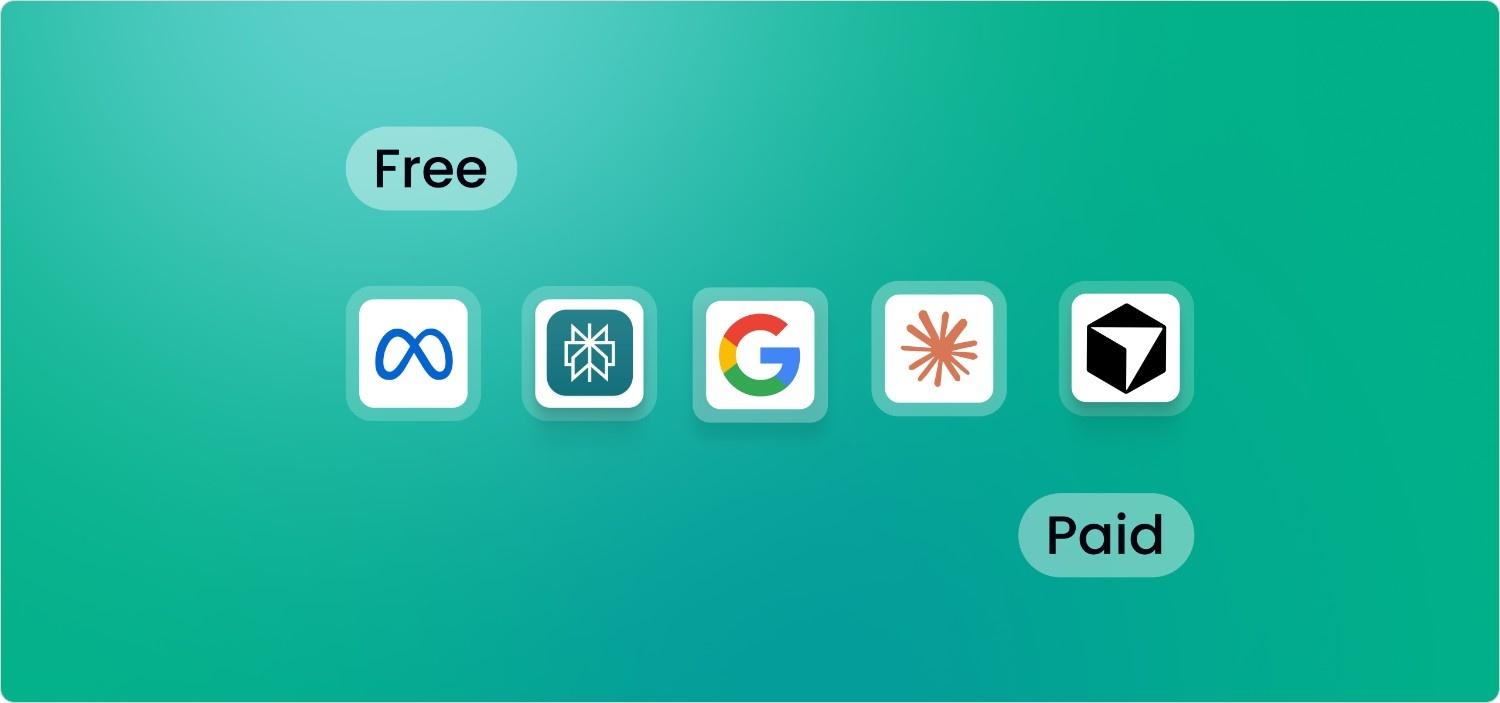
The Marketing team's ChatGPT subscription costs nothing per user. The AI compliance cost; prompt retention, undisclosed region, no DPA, training carve-outs, is measurable, citable, and almost always larger than what the paid tier would have cost.
This piece is a structured comparison. The four ways free-tier AI tools differ from paid tiers in compliance posture, named examples across the major providers, and the cost-benefit calculation for the upgrade-or-replace decision.
The Four Compliance Gaps
Each gap is operational and provable, and each represents a failure of basic AI governance that the vendor's published consumer terms typically describe explicitly. The vendor's published consumer terms typically describe the gap explicitly; the firms that miss these have generally not read the consumer tier terms.
Training-data retention. Free tiers across most major providers retain conversations and use them for model improvement, sometimes with an opt-out, sometimes by default. The paid tiers; Plus, Team, Pro, Enterprise, typically include the explicit position that conversations are not used for training. The retention period itself differs: free tiers often retain for indefinite periods absent user deletion; paid tiers offer shorter defaults and configurable retention.
Region disclosure. Free tiers typically run on the vendor's global infrastructure with no specific data residency commitment. Paid tiers vary, the Team tier offers improved residency commitments at most providers; the Enterprise tier offers explicit EU residency where the firm requires it. For European firms with any meaningful regulatory exposure, the residency disclosure is the practical commitment that supports defensible Article 30 RoPA entries.
DPA availability. The Article 28 GDPR Data Processing Agreement is the gating contractual instrument for any controller-processor relationship involving personal data. Free tiers typically do not offer a DPA, the consumer relationship is contracted on consumer terms, not on processor terms. Paid tiers vary: Team and Enterprise generally offer DPAs; Plus and other individual paid tiers often do not. The implication is that any free-tier or individual-paid-tier use of an AI tool to process personal data on behalf of the firm is operating outside Article 28 entirely. There is no defensible RoPA entry that bridges the gap, and no security governance position that survives scrutiny when the controller-processor relationship has no contractual basis at all.
Terms-of-use carve-outs. Free-tier consumer terms typically include broader vendor-side rights to use, retain, and analyse the inputs and outputs than paid-tier terms. The carve-outs are real: vendor-side use for product improvement, content moderation review, abuse monitoring, internal benchmarking, and other purposes that the paid tier limits more tightly. For some content types, confidential commercial information, draft contracts, customer communications, the consumer-tier carve-outs are operationally incompatible with the firm's confidentiality position.
The fastest way to diagnose a free-tier problem is to ask the vendor for a DPA. Don't check the tier comparison table; ask for the DPA directly, and the response tells you everything. A vendor whose free tier does not support a DPA will usually get back to you within one email exchange. Now the firm knows three things it did not know before: there is no Article 28 contractual basis in place, the current plan cannot provide one, and the only path to a defensible position is to upgrade or replace. What often surprises these firms in that exchange is not the upgrade requirement; it is how long the free tier had been running before anyone raised the question. In most cases, the answer is months, and sometimes longer. The DPA request did not create the problem. It brought visibility into a problem that had been running quietly since the day someone on the marketing team created a free account with a work email. Ankur Arora, Co-Founder, Montro |
Named Examples Across the Major Providers
The pattern holds across the consumer-AI market. Concrete examples for orientation, with the caveat that vendor terms update and the practitioner should confirm current positions at the time of contracting.
OpenAI ChatGPT
Free and Plus: consumer terms with model-training default position (with user-level opt-out for training), no DPA, no specific residency commitment. Team: paid plan with explicit non-training position by default, DPA available, improved residency commitments. Enterprise: full compliance feature set including EU residency where elected, configurable retention, audit logging. The progression is meaningful and the tier decision is most of the governance work.
Anthropic Claude.ai
Free and Pro: consumer terms with the explicit position that consumer conversations are not used for training by default, no DPA on the consumer tiers. Team: paid plan with administrative controls, DPA available, the same non-training default position with additional contractual commitments. Enterprise: full compliance feature set. Anthropic's consumer-tier position on training is more conservative than some other providers, but the DPA gating still applies for processing personal data.
Microsoft Copilot
Copilot Pro (consumer subscription): consumer terms with the consumer Microsoft Services Agreement governing use. Microsoft 365 Copilot (commercial): commercial terms with the Online Services DPA applying, including the data protection commitments in the existing Microsoft 365 contractual framework. The distinction is operationally substantial because the commercial framework brings the Copilot usage into the firm's existing Microsoft DPA and residency commitments, while consumer Copilot Pro does not.
Google Workspace AI Features
Personal Google accounts using Gemini consumer features: consumer terms. Google Workspace AI features for Workspace customers: commercial terms governed by the Workspace Data Processing Amendment. The same pattern: consumer-tier use of Google AI features for work purposes operates outside the firm's commercial agreement.
The Cost-Benefit Calculation for Upgrading
The honest accounting. The per-seat cost of a Team or Enterprise tier across the major providers runs typically €20 to €60 per user per month depending on the provider and the tier. For a firm with two hundred employees genuinely using AI tools, the annualised cost is €60,000 to €150,000 per year, material but not transformative.
The displacement calculation. If the firm is currently using free-tier AI for work purposes, the firm is operating with: incomplete RoPA entries (no DPA, no defensible Article 28 position); residency exposure for EU personal data; vendor-side carve-outs that conflict with confidentiality commitments; regulatory exposure under EU AI Act Article 4 because the AI literacy obligation is harder to discharge against tools the firm has not formally adopted. The cost of operating against any one of those for any reasonable period exceeds the per-seat upgrade cost. The cost of operating against all four of them is usually larger by an order of magnitude, and the case for compliance automation as the alternative to manual gap management becomes straightforward at that point.
The conclusion is straightforward for European firms with meaningful enterprise risk management obligations: free-tier AI tools used for work purposes are operationally indefensible, and the upgrade cost is materially smaller than the compliance cost of the alternative. The conclusion is less clear for firms whose regulatory exposure is genuinely low; small firms, firms with limited personal data processing, firms outside the EU AI Act high-risk surface, but most mid-market European firms do not fit that profile.
When To Replace Rather Than Upgrade
Sometimes the right answer is not upgrade-the-tier but replace-the-tool.
The category is mature in some areas. Where the firm uses an individual-tier consumer AI tool for a use case that has a purpose-built enterprise alternative; recruiting AI, legal AI, customer-support AI, devtools AI, the right answer is often to procure the enterprise tool that was built for the use case rather than upgrade the consumer tool. The enterprise tool typically arrives with the compliance feature set built in: DPAs, residency commitments, audit logging, role-based access. The premium over the consumer tool is generally smaller than the cost of building governance around the consumer tool.
The category is immature in other areas. Where no enterprise alternative yet exists, or where the enterprise alternatives are materially weaker than the consumer leader, the upgrade path is the right answer. The decision is case by case, and the relevant comparison is the use case, not the tool, and it is the comparison that any serious AI governance programme makes at the procurement stage rather than after the fact.
Frequently Asked Questions
Does using a free AI tool at work automatically mean the firm has a GDPR violation?
Not automatically - it depends on whether personal data is being processed through the tool. If an employee uses a free-tier AI tool to draft internal meeting notes with no personal data in the prompt, the GDPR exposure is limited. If the same tool is used to summarise customer correspondence, draft outreach referencing named individuals, or process any data that identifies a natural person, the firm is operating as a controller with no Article 28 DPA in place. That is the violation, not the tool itself, but the processing of personal data without a lawful contractual framework.
Is the Claude.ai free tier safer than ChatGPT free tier for work use?
Anthropic's consumer-tier position on training data is more conservative than some other providers; conversations are not used for training by default on consumer tiers. However the DPA gating still applies regardless of training position. Without a DPA, processing personal data through any consumer-tier AI tool, including Claude.ai free - has no clear Article 28 contractual basis. The training-data position is one of four compliance gaps; the DPA gap applies regardless of how the other three are handled.
What is the EU AI Act Article 4 implication of using free-tier AI tools?
Article 4 requires providers and deployers to ensure their staff dealing with AI systems have a sufficient level of AI literacy, taking into account the technical knowledge, experience, and context of use. A firm using free-tier AI tools it has not formally adopted cannot demonstrate the structured literacy programme Article 4 requires, because the tools are outside the firm's governance perimeter. Informal use of consumer AI tools makes the Article 4 competence obligation structurally harder to discharge, and is a recognised gap in enterprise risk management for any firm operating under the EU AI Act.
Can a firm sign a DPA with an AI vendor retroactively to cover past processing?
A DPA signed today covers processing from the date of signing, not retroactively. Processing that occurred before the DPA was in place occurred without a lawful Article 28 basis, the DPA does not cure that exposure. The practical implication is that firms discovering free-tier AI use after the fact need to assess the processing that occurred, determine whether it involved personal data, and consider whether an Article 33 notification assessment is required, in addition to putting the DPA in place for future processing.